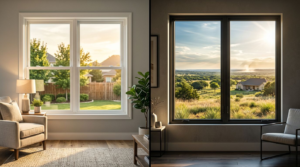
For most Denton and North Texas homes, fiberglass windows handle Texas heat better than vinyl, but the best choice depends on budget and the full window package. Fiberglass frames stay more stable under long sun exposure and high temperatures. Vinyl windows usually cost less and can still work well when they use strong frames, quality weatherstripping, Low-E glass, and professional installation.
Homeowners comparing local options can start with window replacement Denton TX to see how material, glass, and installation affect comfort and long-term value.
Why Texas heat changes this decision
A window frame in North Texas deals with more stress than the same frame in a mild climate. Long summers, strong afternoon sun, and wide temperature swings push materials to expand and contract over and over.
That matters in Denton, TX, because repeated movement can affect how tightly a window seals. When seals loosen, hot air sneaks in, cooled air leaks out, and rooms near the glass feel less comfortable. The AC works harder, and utility bills often rise with it.
The frame material matters, but it is only part of the story. Glass type, spacer system, weatherstripping, and installation quality all shape how a window performs. A strong frame paired with poor glass can still disappoint. On the other hand, a well-built vinyl unit with the right glass package can outperform a weak fiberglass product.
Texas heat also exposes small flaws faster. A window that looks fine in spring may show its limits in August. Sashes may feel tighter, seals may work harder, and west-facing rooms may heat up faster than expected.
That is why the vinyl versus fiberglass window choice is different in this region. The question is not only which material looks good on day one. The better question is which material keeps its shape, holds its seal, and helps the home stay cooler through years of heat and sun.
How vinyl windows perform in Denton and North Texas
Vinyl remains popular for one simple reason: it gives homeowners a lower entry price. For many homes, that makes vinyl a practical path to window replacement, especially when several openings need attention at once.
Good vinyl windows also offer solid insulation. The material does not conduct heat as quickly as metal, and many frames use multi-chamber designs that help slow heat transfer. When combined with insulated glass, vinyl can support strong energy performance.
The weak point shows up under high heat. Vinyl tends to expand more than fiberglass when temperatures climb. In a place with long sun exposure seasons, that extra movement can put more stress on corners, seals, and operating parts. On large openings, or with lower-grade products, that can lead to windows that feel less precise over time.
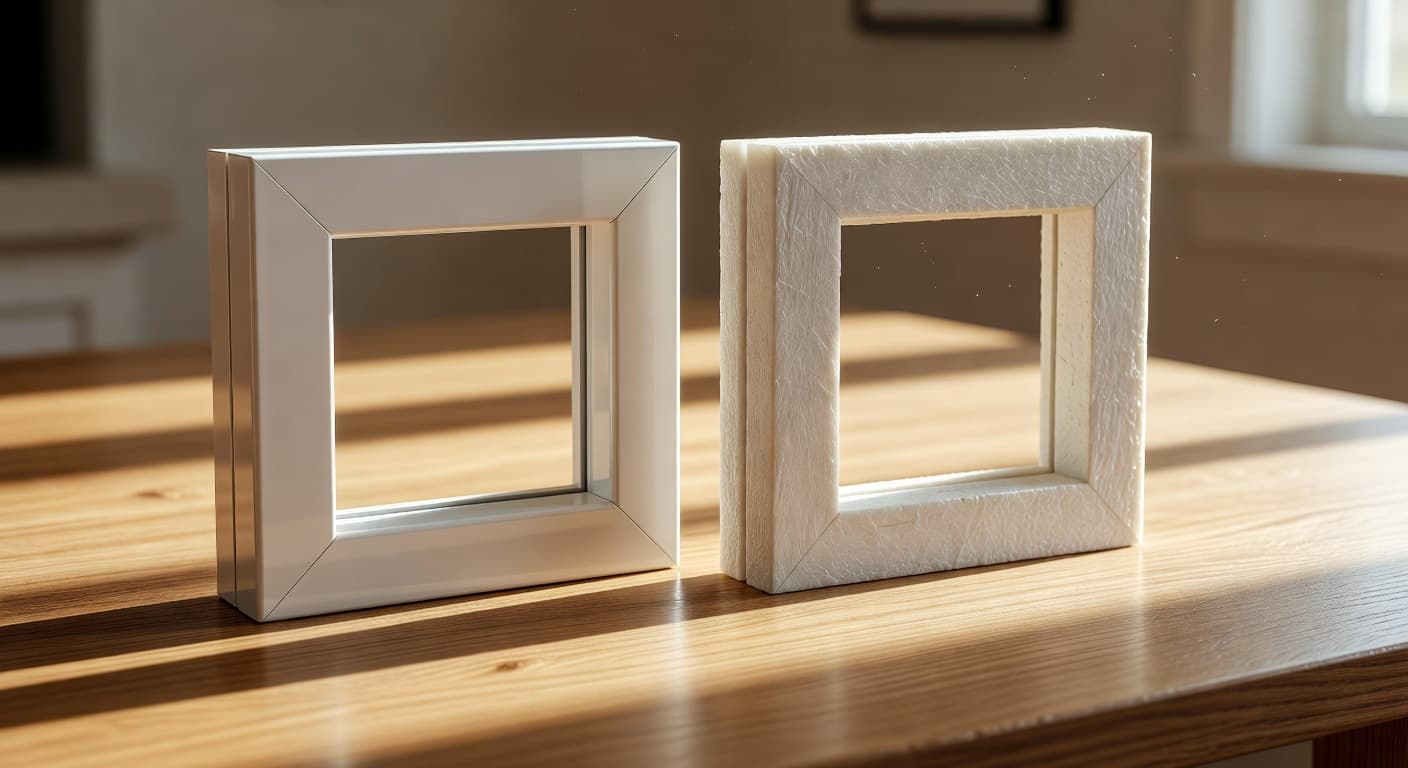
Vinyl and fiberglass can look similar at first glance, but heat changes the comparison.
Still, vinyl should not be dismissed. A well-made vinyl window with reinforced meeting rails, strong weatherstripping, and quality glass can perform well in North Texas. For standard-size windows, shaded elevations, or homeowners trying to control upfront cost, vinyl often makes sense.
Vinyl is also low maintenance. It does not rot, and it never needs scraping or repainting like wood. That makes it attractive for busy households or phased replacement plans. When a homeowner wants solid comfort gains without stretching the budget too far, vinyl is often the better fit.
Why fiberglass often wins under long sun exposure
Fiberglass earns its reputation in Texas because it stays more stable in heat. That stability helps the sash stay square, the seal stay tighter, and the operating parts keep a smoother feel over time.
In practical terms, a fiberglass frame usually moves less as temperatures rise. That matters on south-facing and west-facing walls, where afternoon sun can beat on the same windows for hours. It also matters on larger windows, where frame strength plays a bigger role.
Fiberglass is also strong for its size. Many products use slimmer frames without giving up rigidity, so the home gets a clean look and sometimes a bit more glass area. For homeowners who plan to stay in the house a long time, that extra durability can be worth the higher upfront price.
The main drawback is cost. Fiberglass windows usually come in above vinyl, and the gap can grow when the project includes premium glass, custom colors, or larger openings. Choices may also be narrower at lower price points.
That said, fiberglass does not win by frame material alone. If the glass package is weak or the installation is sloppy, the window will still underperform. Texas homes need a complete system that fits the climate, not a label that sounds impressive.
Which option is more energy efficient in Texas homes?
When homeowners compare energy efficient windows, the frame gets most of the attention. In Texas, the glass package often matters just as much.
In North Texas, the right glass and a tight installation can matter as much as the frame material.
Low-E glass coatings matter more than most homeowners expect
Low-E glass has a thin coating that helps reflect heat. In a hot climate, that helps reduce the amount of solar heat entering the home while still allowing natural light to pass through.
That is a big deal in Denton and across North Texas, where sunlight stays intense for long stretches of the year. A vinyl window with strong Low-E glass can beat a fiberglass window with a weak glass package. The reverse is also true.
SHGC is one number worth asking about
SHGC stands for Solar Heat Gain Coefficient. It measures how much solar heat the window lets through. In hot climates, a lower SHGC often helps keep interiors cooler.
The best number depends on the home’s exposure and design. A west-facing bedroom may benefit from a lower SHGC than a shaded north-facing room. A good installer balances daylight, glare, and heat gain instead of using the same package everywhere.
This quick comparison shows where each frame tends to land:
| Factor | Vinyl | Fiberglass | Texas takeaway |
|---|---|---|---|
| Heat movement | More expansion in high heat | Less expansion | Stable frames help seals stay consistent |
| Upfront price | Usually lower | Usually higher | Vinyl often fits tighter budgets |
| Frame strength | Good in quality products | Stronger overall | Fiberglass helps on large openings |
| Energy performance | Can be excellent | Can be excellent | Low-E glass and SHGC often decide more |
| Maintenance | Low | Low | Both are easier than wood |
The table points to the real takeaway: neither material wins on every house. For many homeowners, the better next step is comparing energy efficient windows Denton TX with the right glass package for the home’s sun exposure.
For anyone wanting an outside visual comparison, this video review of vinyl and fiberglass windows gives a quick look at cost, durability, and efficiency.
How window replacement cost changes the choice
For most projects, vinyl starts lower and fiberglass starts higher. That simple fact shapes many buying decisions, especially in full-home replacement work.
Still, frame material is only one part of window replacement cost. Price also changes with opening size, custom shapes, full-frame versus insert installation, glass upgrades, grille patterns, trim repair, and labor. A low sticker price on the frame does not always mean a lower finished project cost.
That is why many Denton homeowners compare value, not only price. If fiberglass holds its shape better on a hot west wall and stays tighter over time, the higher upfront cost may make sense. If the home needs many standard-size windows and budget control matters most, vinyl may offer the better balance.
Phased replacement is another factor. Some homeowners replace the worst-performing windows first, then finish the rest later. In that case, vinyl can make a large project more manageable without giving up meaningful comfort gains.
A local guide to window replacement cost Denton TX helps show how material, glass, and installation details change pricing in real homes.
Which material fits the home best?
Vinyl is often the smart choice when the project needs to stay cost-conscious, the windows are standard sizes, and the homeowner still wants a clear jump in comfort. It also fits well when the house needs several windows replaced at once and a practical return matters more than premium frame strength.
Fiberglass usually makes more sense when the home gets intense direct sun, has larger openings, or the owner plans to stay put for many years. In those cases, better heat stability can justify the higher upfront price.
North Texas homes also vary more than many people expect. Brick homes with little shade, west-facing living rooms, and older drafty units all put extra pressure on a window system. Because of that, the best answer often comes from matching the frame, glass, and installation method to the house itself.
Homeowners do not need to pick a material based on marketing claims alone. They need a window that stays sealed, lowers heat gain, and works smoothly after years of summer sun.
Conclusion
For Texas heat, fiberglass usually has the edge because it stays more stable under long sun exposure. Vinyl still earns its place because it costs less and can perform well when the product quality and glass package are right.
The strongest choice for Denton and North Texas homes comes from looking at the full system, frame material, Low-E coatings, SHGC, and installation quality. That is what turns a simple window replacement into a comfort upgrade.
Homeowners who want a clear recommendation for their home can get a free window replacement estimate and compare vinyl and fiberglass options with local climate in mind.