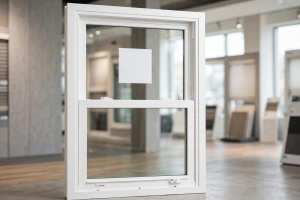
A double-hung window has two movable sashes that slide vertically inside the frame. You can raise the lower sash, lower the upper sash, or open both at the same time. Most modern versions also tilt inward, making the exterior glass easier to clean from inside the home.
That simple operation is why double-hung windows remain one of the most familiar choices in North Texas homes. They fit traditional and updated exteriors, work without projecting outside the wall, and give homeowners more control over where fresh air enters the room.
What Is a Double-Hung Window and How Does It Work?
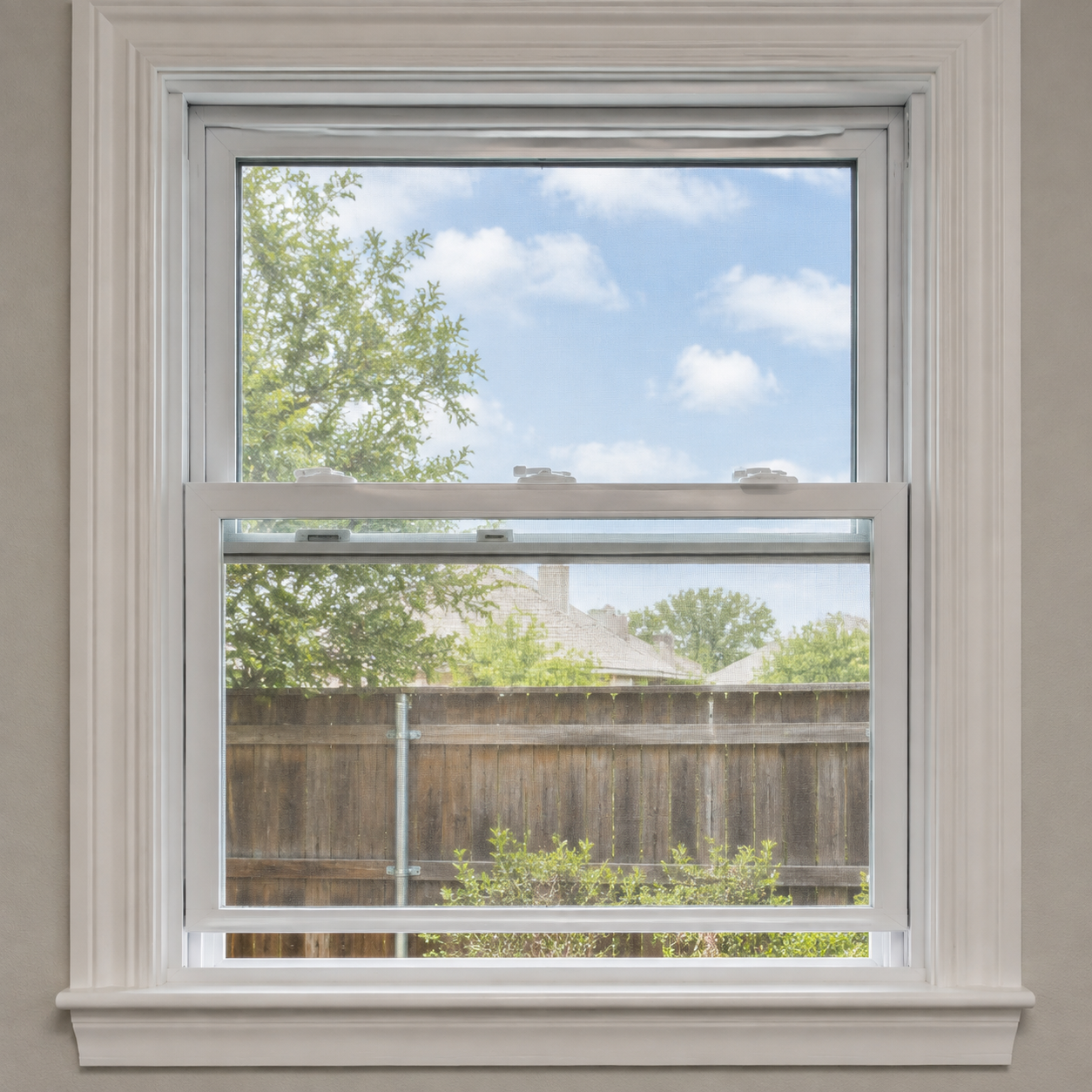
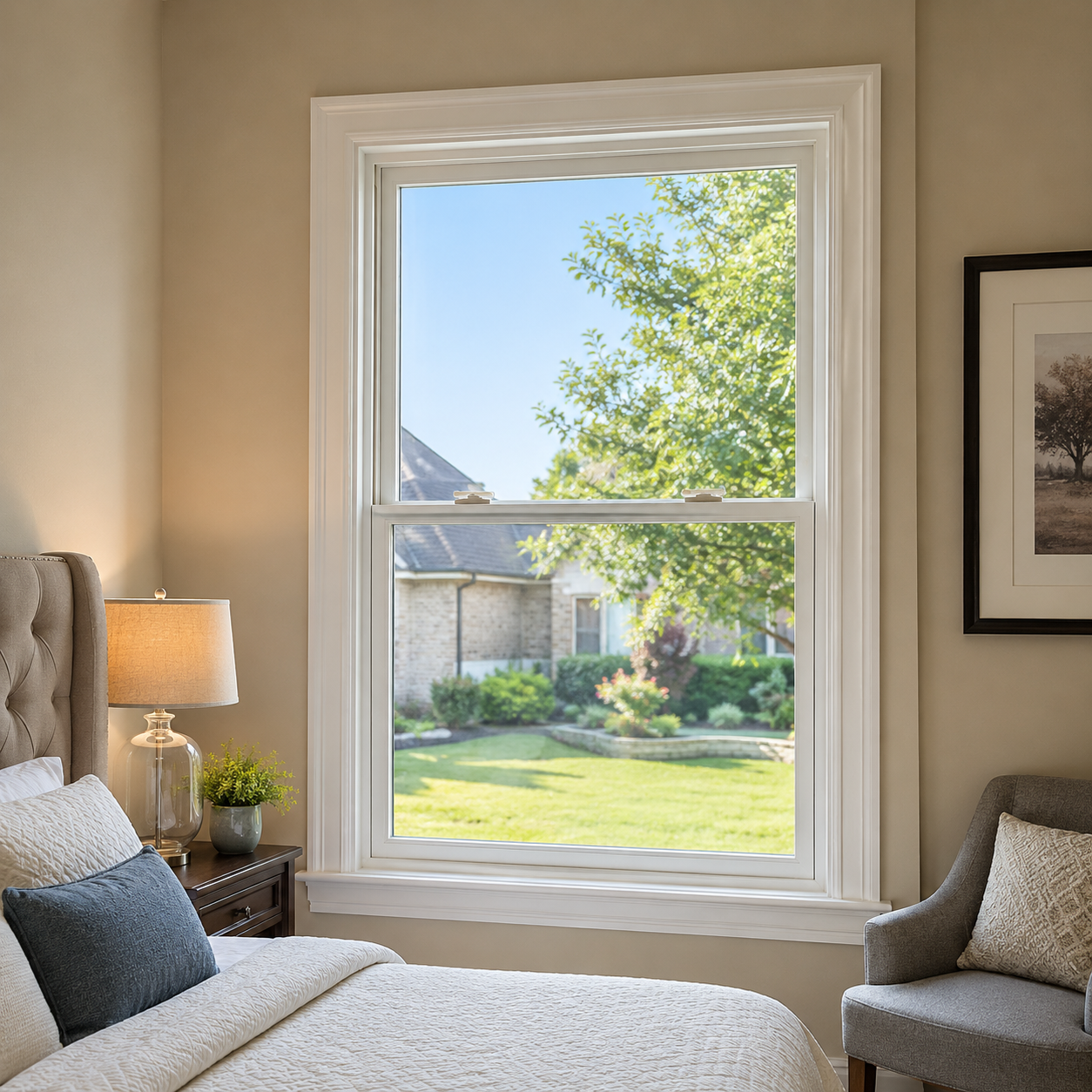
A double-hung window is divided horizontally into an upper sash and a lower sash. Each sash holds its own pane of glass and travels up or down in tracks built into the side jambs. Counterbalance systems inside the frame help support the sash so it stays where you place it.
The lock at the meeting rail pulls the two sashes together when the window is closed. Weatherstripping around the sashes helps limit air and water movement. On a well-made unit installed square in the opening, both sashes should move smoothly without dropping, rattling or binding.
The defining feature is that both sashes operate. If only the lower sash moves while the upper glass remains fixed, it is a single-hung window.
What Makes Double-Hung Windows Practical?
Flexible airflow
Open the lower sash, upper sash or both. Lower openings bring in air while upper openings give warm indoor air another place to escape.
No outward swing
The sashes stay inside the frame, making this style useful beside patios, walkways, shrubs and other tight exterior areas.
Easier cleaning
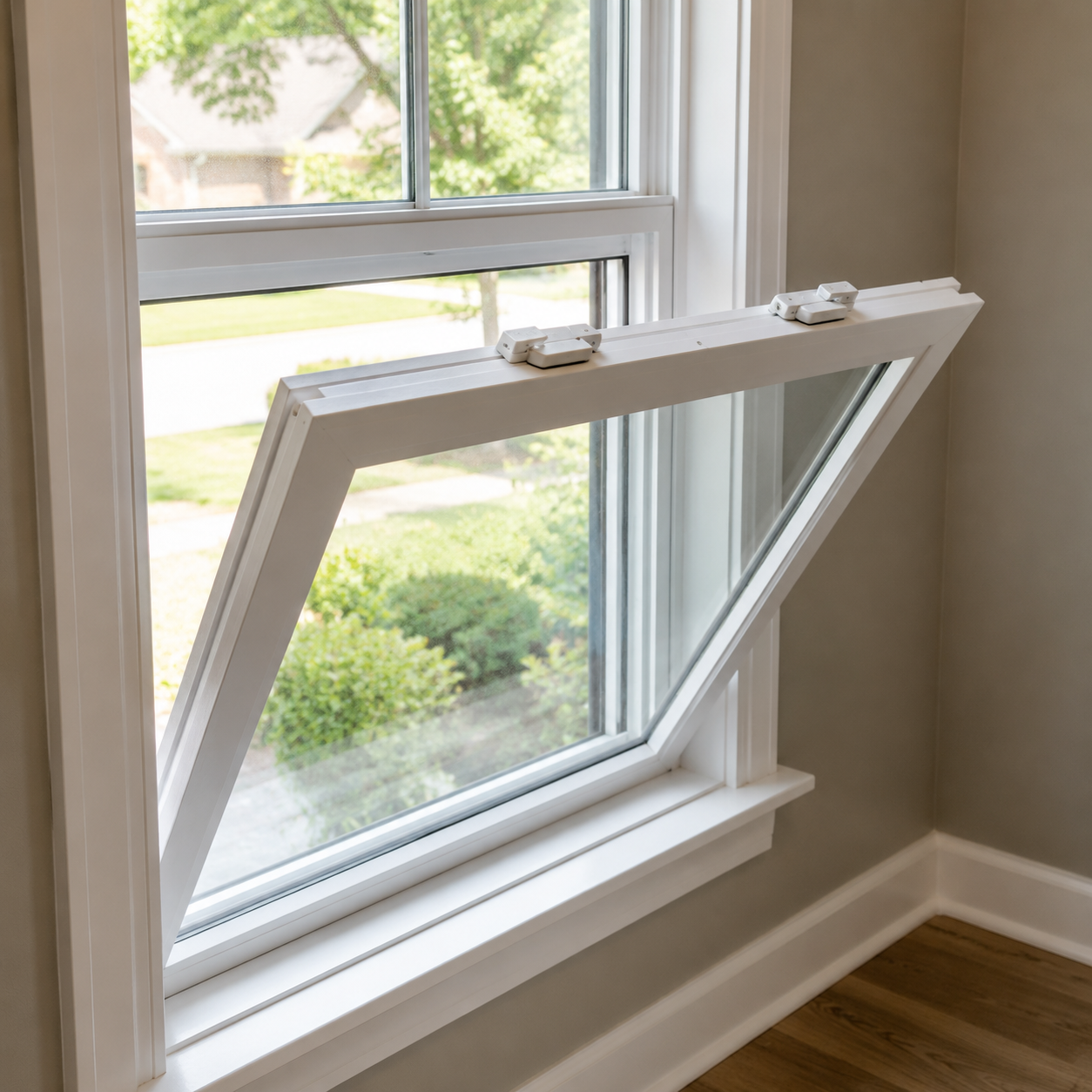
Many replacement models have tilt latches so homeowners can clean both sides of the glass without working from a ladder.
How Do Tilt-In Sashes Work?
On many modern double-hung windows, small tilt latches release the top edge of a sash from its side tracks. The sash then tips toward the room while remaining supported at the bottom. This gives you access to the outside surface of the glass.
The exact release method varies by manufacturer. The sash should be supported with both hands and returned squarely to its tracks before the window is operated again. Never force a latch or let a tilted sash hang by one corner.
Cleaning convenience is useful on a second floor, but it does not make every part maintenance-free. Tracks still need to stay clear, locks must line up, weatherstripping should be inspected and drainage openings should not be blocked.
Double-Hung Windows Compared With Other Styles
The best style depends on how you want the opening to function, not simply which window is most familiar.
| Window style | How it opens | Where it works well | Main consideration |
|---|---|---|---|
| Double-hung | Both sashes slide vertically | Bedrooms, living areas and traditional elevations | Meeting rail divides the view |
| Single-hung | Lower sash moves; upper sash stays fixed | Simple vertical operation | Less ventilation and cleaning flexibility |
| Casement | Side-hinged sash swings outward | Broad views and full opening ventilation | Needs exterior swing clearance |
| Sliding | Sash moves horizontally | Wide openings and low-clearance locations | Vertical frame member divides the view |
| Picture | Does not open | Daylight and unobstructed views | Provides no ventilation |
Are Double-Hung Windows Energy Efficient?
They can be, but the words “double-hung” describe operation—not energy performance. Frame construction, glass, Low-E coating, spacer design, weatherstripping and installation all affect how the finished window performs.
For North Texas homes, pay close attention to solar heat gain. West-facing glass can make a room uncomfortable during late-afternoon heat even when the window is not drafty. The NFRC label gives product-specific ratings, including U-factor and Solar Heat Gain Coefficient.
JBN Windows brand windows are made with heavy-duty vinyl and Cardinal Low-E 366 glass. We also work factory direct with Pella, Andersen and MI Windows. The right option depends on the measured opening, exposure and project goals—not a one-size-fits-all claim.
What we check before recommending a window
- Condition and dimensions of the existing opening
- Sash operation, balance and locking points
- Sun exposure and the correct glass package
- NFRC ratings for the exact product configuration
- Perimeter insulation, sealing and drainage
What Should You Consider?
Two movable sashes create more operating joints than a fixed window. Locks, balances and weatherstripping need to remain aligned. A sash that will not stay open or feels unusually heavy may have a balance problem.
The center meeting rail also divides the view. Homeowners who prioritize one large, uninterrupted pane may prefer a picture window or casement in certain rooms.
Finally, do not assume a familiar window style is automatically the correct emergency escape window. The clear opening depends on the exact unit size and installation.
What Should You Look For?
Operate both sashes. They should travel smoothly, remain where placed and lock without forcing the meeting rails together. Check that tilt latches feel secure and that screens can be removed without damaging the frame.
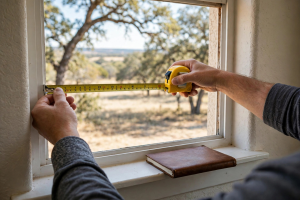
Compare the exact glass package and written ratings. Ask how the replacement will be measured, insulated, sealed and trimmed. A good window can still perform poorly when the opening is out of square or the perimeter is left unsealed.
Frequently Asked Questions About Double-Hung Windows
What is the difference between single-hung and double-hung windows?
Both sashes move on a double-hung window. On a single-hung window, the lower sash moves while the upper sash remains fixed.
Can you open the top and bottom of a double-hung window?
Yes. You can open either sash or both. Opening the bottom and top at the same time can support air movement at two different heights.
Do double-hung windows tilt in for cleaning?
Many modern replacement models do, but the release method differs by manufacturer. Confirm the feature on the exact product and follow its operating instructions.
Are double-hung windows good for bedrooms?
They are commonly used in bedrooms because they provide adjustable ventilation and do not swing into the room or outside. Where emergency escape requirements apply, the exact unit must provide the necessary clear opening.
How long do double-hung windows last?
Service life varies with product quality, exposure, installation and maintenance. Smooth operation, intact weatherstripping and proper drainage help protect performance over time.
Is a Double-Hung Window Right for Your Home?
If you want familiar operation, adjustable top-and-bottom ventilation and tilt-in cleaning, a double-hung window may be a strong fit. If your priority is one uninterrupted view or the widest possible opening, another style may serve a particular room better.
JBN Windows is a division of The JBN Group, Inc., family owned since 1996. We provide in-home window consultations throughout Denton and surrounding North Texas communities. Explore our double-hung windows, review our window replacement services, or call 469-340-0834.