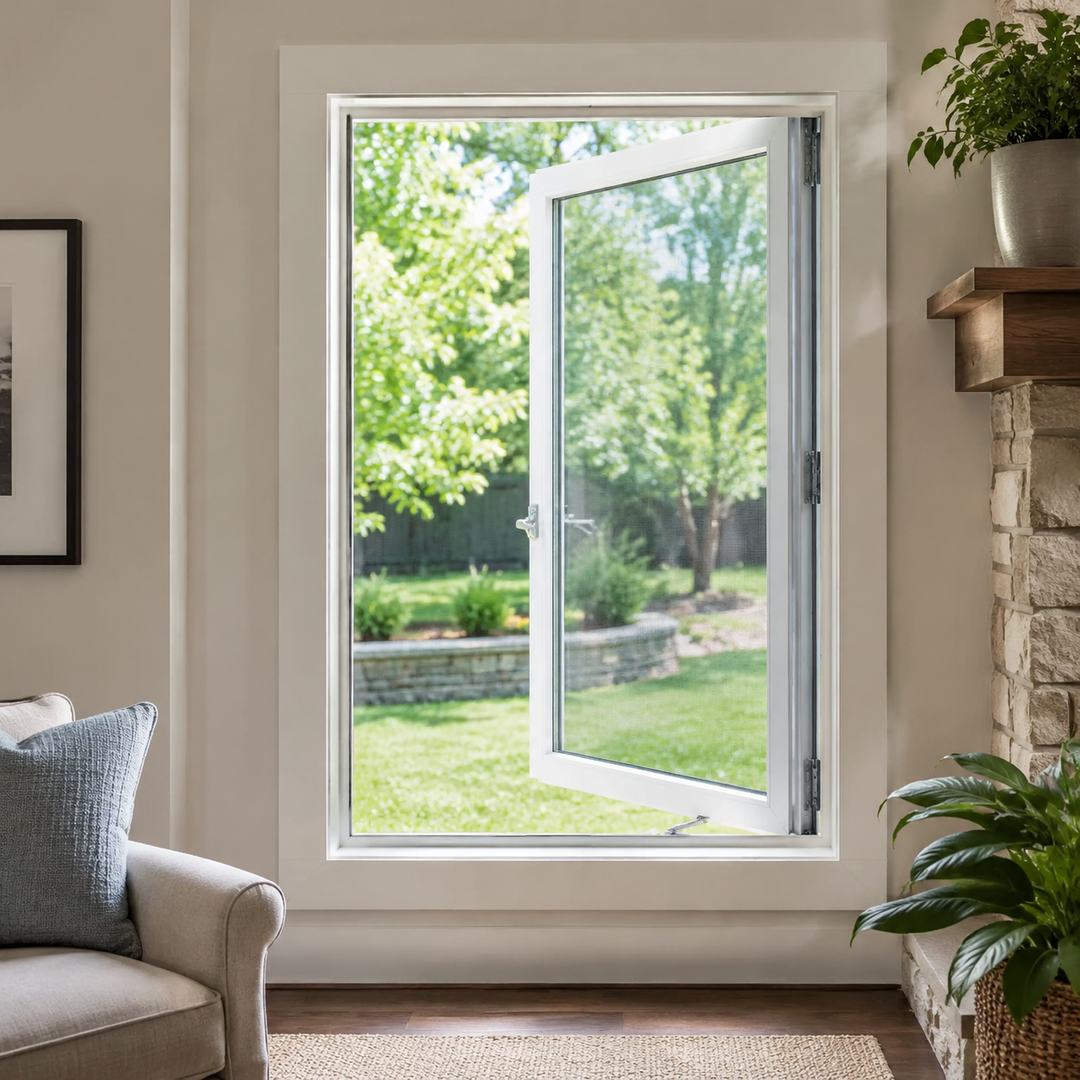
A casement window is hinged on one side and opens outward, usually by turning a crank. Think of it as a glass door built into a window opening. The entire sash swings away from the frame, providing a broad view, strong ventilation and a firm seal when locked.
The more useful question is whether this style fits the room, the outside clearance and the way you use the window. Casements are excellent in some locations and inconvenient in others. Here is what North Texas homeowners should understand before ordering one.
What Is a Casement Window and How Does It Work?
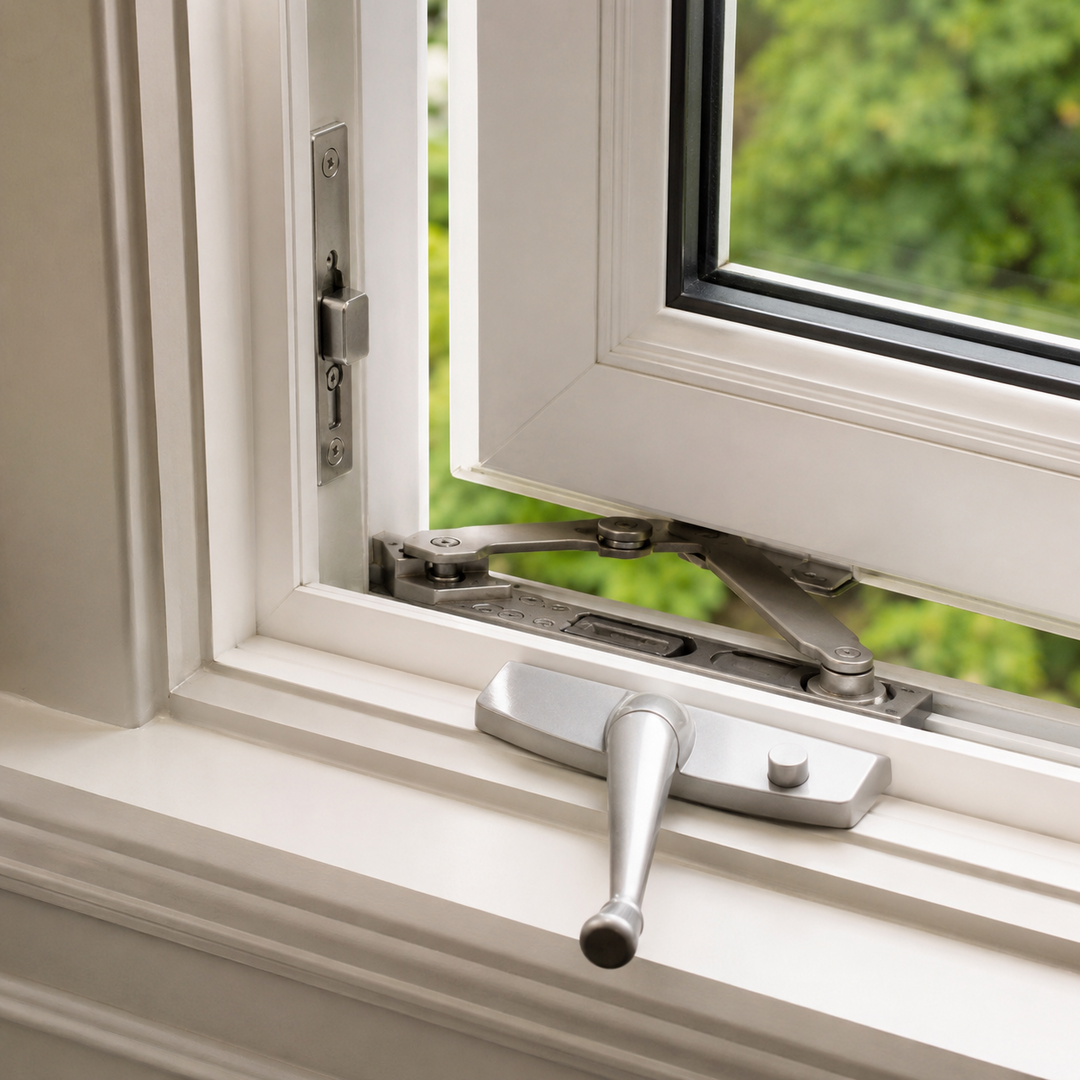
A casement window has a movable glass panel, called the sash, attached to the frame with hinges along the left or right side. Most residential casements use a folding handle or crank. Turning the handle moves an operating arm that pushes the sash outward.
The screen stays on the room side because the glass moves outside. When the sash closes, locking hardware draws it against weatherstripping around the frame. That compression-style closure can control air leakage well when the unit is properly built, measured and installed.
A left-hinged and right-hinged casement can be paired together or placed beside a fixed picture window. The correct configuration depends on the view, airflow, furniture and exterior clearance.
Clear Views, Strong Ventilation and Easy Operation
More open glass
A single casement sash avoids the meeting rail found on double-hung windows and provides a cleaner outdoor view.
Broad ventilation
The full sash opens, and the angled glass can catch a passing breeze and help direct fresh air into the room.
Reachable crank
A low handle can be easier to operate above a sink or counter than a sash that must be lifted by hand.
Where Does a Casement Window Work Best?
Kitchens are the obvious example, especially above a sink. Casements also work well in living rooms, bedrooms, home offices and stairwells where homeowners want daylight and a wide outdoor view.
The large glass area suits modern and transitional homes. Grille patterns and paired configurations can also complement a more traditional exterior.
- Check walkways: The open sash must not project into a busy path.
- Check landscaping: Glass needs room to clear shrubs, fences and overhangs.
- Check reach: The crank should remain comfortable to operate.
- Check safety: Applicable emergency-opening requirements still matter.
Casement Windows Compared With Other Styles
Start with how the opening needs to function. The practical differences are more important than the product name.
| Style | How it opens | Best use | Main limitation |
|---|---|---|---|
| Casement | Side-hinged sash swings outward | Broad views, full ventilation and crank operation | Needs exterior swing room |
| Awning | Top-hinged sash opens from the bottom | Shorter openings and fixed-window combinations | Still needs outdoor clearance |
| Double-hung | Upper and lower sashes move vertically | Traditional homes and adjustable airflow | Only part of the opening is available at once |
| Sliding | One sash moves horizontally | Wide openings without exterior swing room | A vertical frame member divides the view |
Are Casement Windows Energy Efficient?
They can be, but operating style is only one part of the answer. In Denton and surrounding North Texas communities, solar heat through the glass can matter more than whether the sash swings or slides. West-facing openings deserve special attention.
Look at the NFRC label for the exact product and glass configuration. U-factor measures heat transfer; lower numbers indicate better insulating performance. Solar Heat Gain Coefficient measures how much solar heat comes through the glass; lower numbers resist more solar heat.
A casement with basic glass is not automatically better than another style with a glass package suited to the home. Learn more in our energy-efficient windows guide.
What JBN checks
- Opening size and condition
- Handle reach and exterior clearance
- Sun and weather exposure
- NFRC ratings for the exact glass package

What Are the Drawbacks?
Casements have moving hinges, crank arms and locks. They should operate smoothly and line up correctly. Dirt, forcing the handle or operating a binding sash can shorten hardware life.
Exterior clearance is the larger issue. A casement may be wrong beside a walkway, fence or tight side yard. Close and lock the window when severe North Texas weather approaches.
Cleaning access varies by design. Follow the manufacturer’s instructions rather than spraying unapproved lubricant into the hardware.
What Should You Look For?
Start with the opening, not the brand name. Confirm the operating direction, handle location and outdoor space. Then compare the frame, glass package, finish, screen, locks and written performance ratings.
Installation matters just as much. The frame must be square so the sash travels correctly and meets the weatherstripping evenly. The perimeter must be insulated and sealed, and the operator and locks should be tested.
Frequently Asked Questions About Casement Windows
Do casement windows open inward or outward?
Most residential casement windows open outward. The insect screen normally stays on the interior, which is why exterior clearance must be checked.
Can a casement window be used above a kitchen sink?
Yes. A crank can be easier to operate across a countertop than a sash that must be lifted. The window height, counter depth, faucet and handle position should still be measured.
Do casement windows have screens?
Yes. Because the sash opens outward, the screen generally stays on the inside of the frame.
Are casement windows hard to maintain?
Routine care is straightforward: keep the frame, hinges and operator free of debris, do not force the crank, and inspect the weatherstripping.
Can casements replace double-hung or sliding windows?
Often they can, but dimensions, trim, drainage, operating direction and outdoor swing room all affect whether a casement is a sensible replacement.
Is a Casement Window Right for Your Home?
If you want a clear view, broad ventilation and crank operation, a casement window may be an excellent fit. If the opening faces a walkway, fence or tight landscaping, another style may serve the room better.
JBN Windows is a division of The JBN Group, Inc., family owned since 1996. We provide in-home window consultations throughout Denton and surrounding North Texas communities. Explore our casement windows, review our window replacement services, or call 469-340-0834.