You close the windows, turn on the heat, and still feel a cold stream on your ankles. It can make one room feel fine, while the next feels like a garage. If you’re dealing with window drafts winter after winter, you’re not imagining it.
Cold air can sneak in through tiny gaps, or you can feel “cold” even when the window is sealed. The fix depends on which problem you have. Once you know the difference, you can stop wasting heat, reduce air infiltration, and make your home feel steady again.
Why a “closed” window can still feel cold

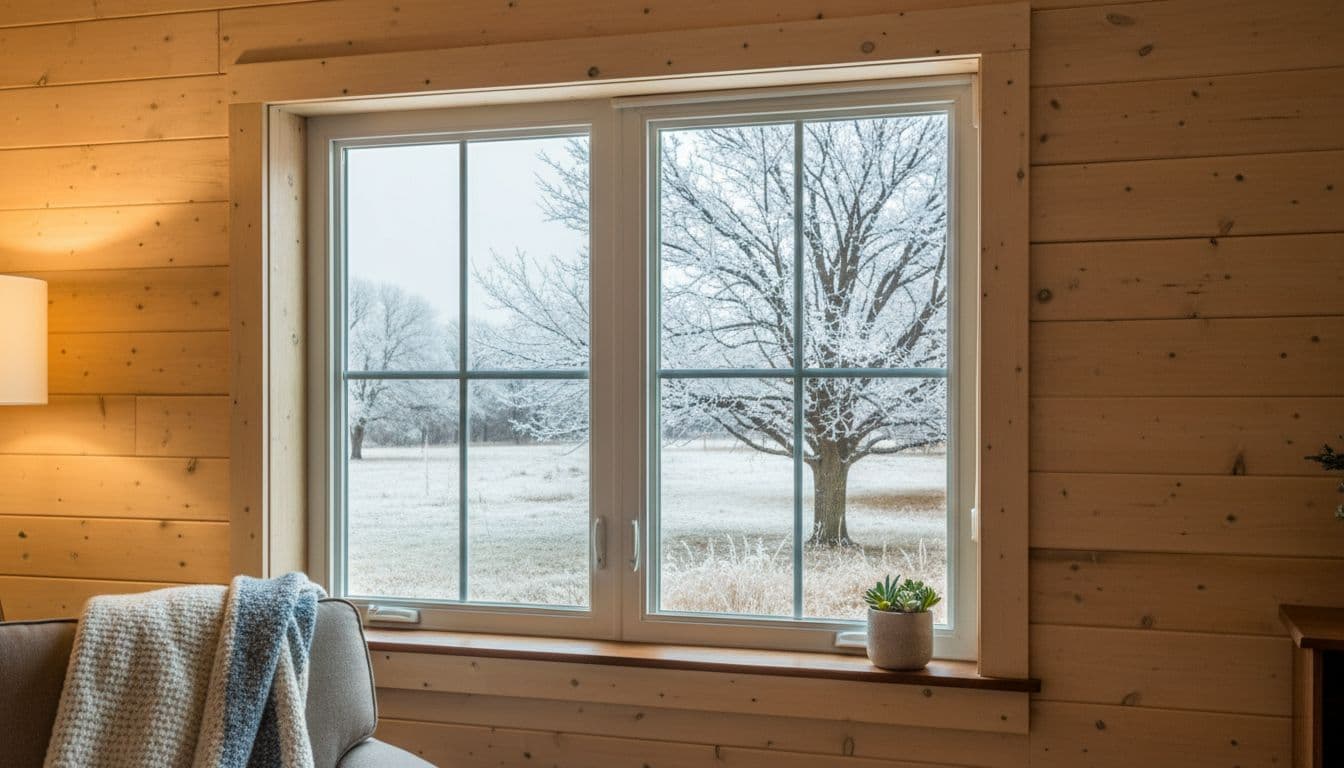
Photo by Pixabay
A window can make you uncomfortable in two main ways: air leaks and heat transfer. They feel similar, but they’re not the same.
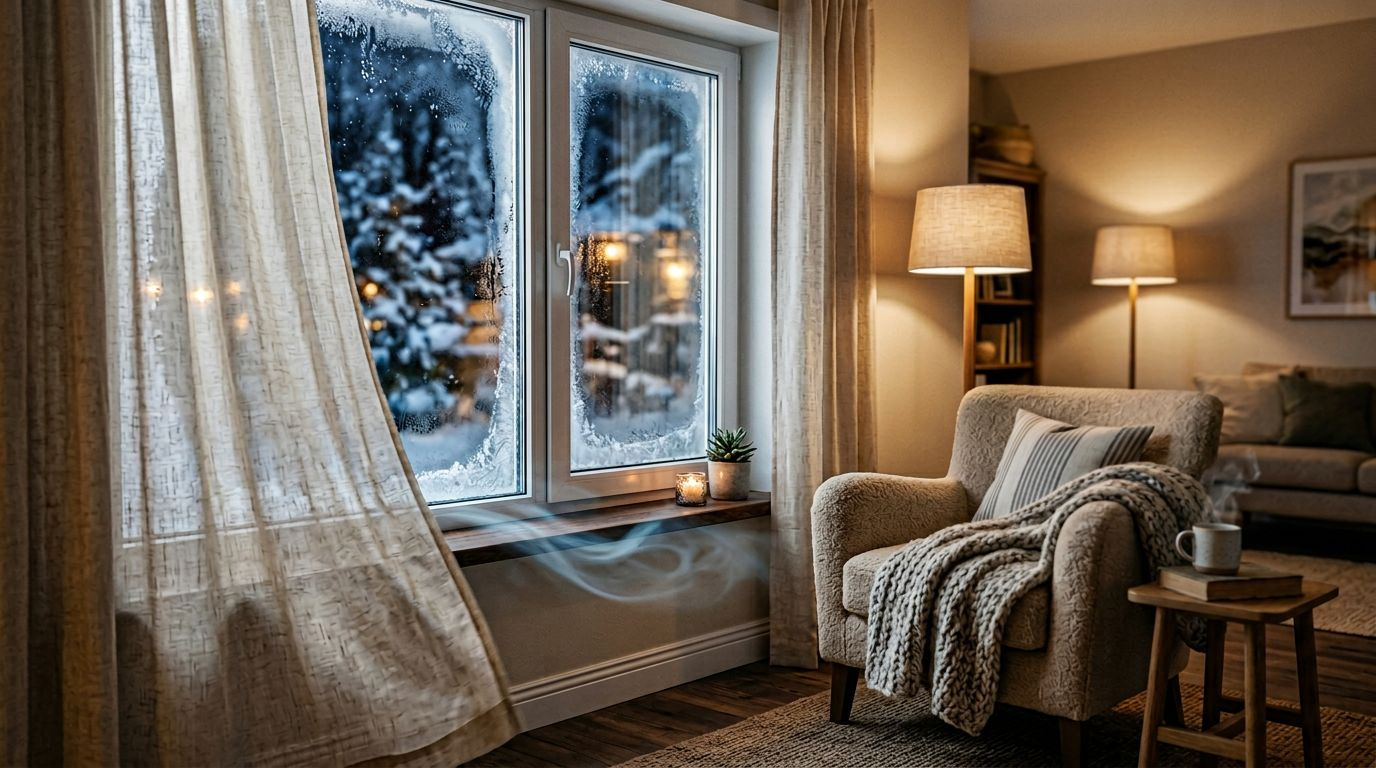
With air leaks, outdoor air is literally moving into your home. That’s air infiltration. You’ll often notice a fluttering curtain, a whistling sound, or a clear “line” of cold near the frame.
With heat transfer, the window might be sealed, yet the glass is so cold that it chills the air next to it. That cold air then sinks and slides across the floor like water. It’s the same reason you feel cold standing next to an open fridge, even if you never touch it.
Pressure changes make this worse in winter. When your heater runs, warm air rises and escapes through small leaks up high (attic, can lights, vent fans). As a result, your home pulls replacement air from lower areas, including around windows. If your window has even a hairline gap, it becomes a straw.
Condensation is another clue. When moist indoor air hits cold glass, water forms. Over time, that moisture can stress seals, stain trim, and shorten the life of the glazing and frames.
If you want a pro to pinpoint whether you’re fighting air leakage or cold glass, call (469) 340-0834 for a quick estimate and a clear plan.
The most common places cold air gets in (even when the window is locked)
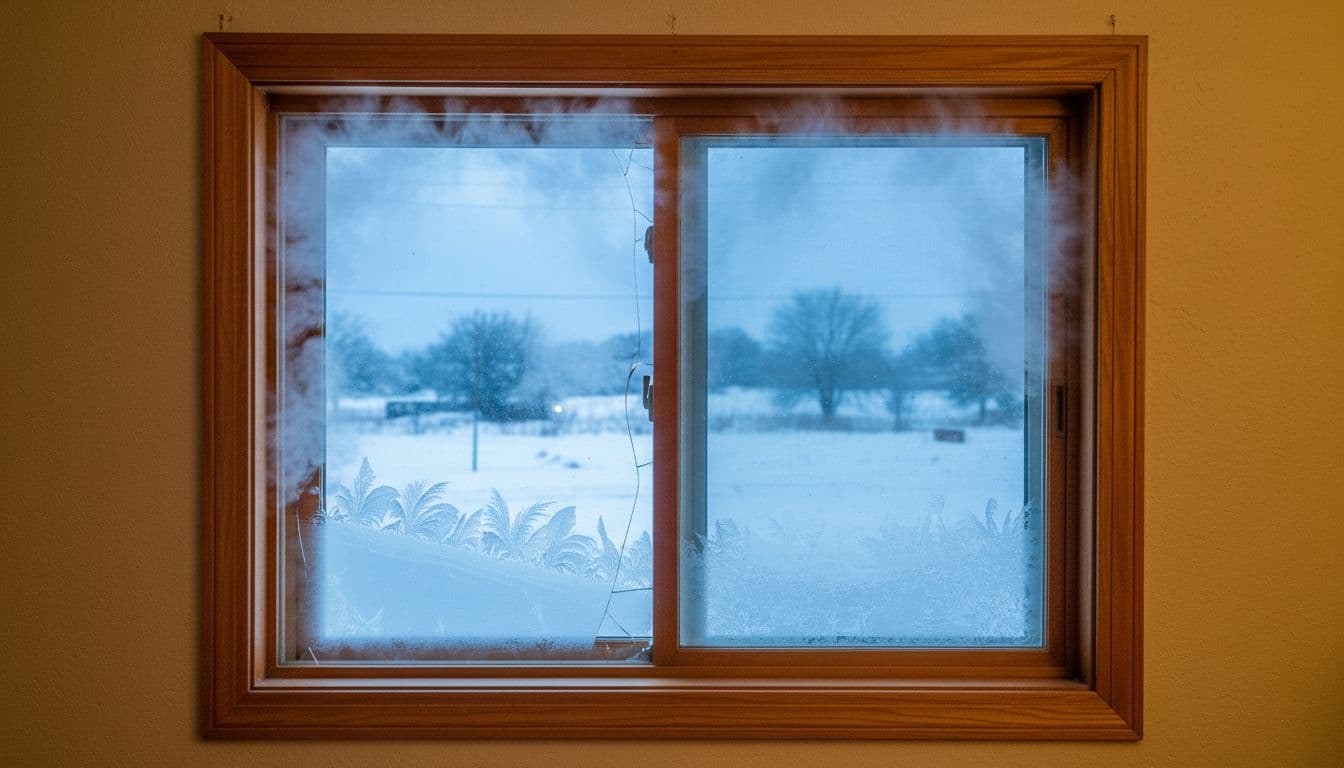
Most winter drafts don’t come “through the glass.” They come from the edges, the moving parts, or the connection between the window and your wall. In North Texas, fast temperature swings can also make materials expand and contract, which opens gaps over time.
Here are the usual culprits:
- Worn weatherstripping: The fuzzy or rubber seal around the sash can flatten, tear, or pull loose. Once it fails, wind finds the path of least resistance.
- Sash alignment issues: If the sash doesn’t sit square in the frame, the lock may engage but the seals won’t compress evenly. That leaves tiny channels for air infiltration.
- Gaps at the interior trim or casing: Cold air can travel around the frame, then spill out at the trim. The draft feels like it’s “from the window,” but it’s really from the perimeter.
- Old or failed glazing seals: In double-pane windows, the seal that keeps the unit tight can fail. That doesn’t always create a breezy draft, but it often creates cold glass, fogging, or poor insulation.
- Installation/fit problems: Even good windows can draft if the unit wasn’t set, shimmed, insulated, and sealed correctly.
To make this easier, use this quick matching guide:
| What you notice | Likely cause | What usually helps |
|---|---|---|
| Draft strongest at corners | Weatherstripping or sash alignment | Replace weatherstripping, adjust sash, re-square |
| Draft seems to come from trim | Gap at frame-to-wall | Low-expansion foam, interior caulk, exterior sealing |
| Glass feels icy, no obvious breeze | Weak glazing or failed seal | Upgrade glazing, low-E, argon, or replacement |
| One room always colder | Pressure imbalance + leaky openings | Air sealing plus targeted window fixes |
If your hand feels air movement, you’re not dealing with “bad insulation,” you’re dealing with leakage. Stop the air first, then worry about upgrades.
If you’d rather skip the guesswork and have a crew check the seals, sash condition, and installation/fit, call (469) 340-0834 for an estimate.
Repair vs replacement: how to stop window drafts fast and keep them from coming back
The right fix depends on what’s failing: a seal you can renew, or a window system that’s reached the end of its useful life.
When a repair makes sense (and what to do first)
If your frames are solid and the window still operates smoothly, repairs can be a smart first step.
Start with weatherstripping. If it’s missing, crushed, or brittle, you’ll never get a tight seal. Next, check the lock. On many windows, the lock helps pull the sash snug against the seals, so a loose lock can mean a loose seal.
Then look at the edges where trim meets frame. A thin bead of paintable caulk on the interior can block small air paths. Outside, cracked sealant can also let wind wash around the unit. (If you’re unsure where the water path goes, don’t seal blindly. Trapping water is its own problem.)
Temporary options, like interior window film, can help during a cold snap, but they’re a bandage. If you keep repeating the same winter routine, it’s a sign the window system isn’t sealing like it should.
If you want a long-term fix without jumping straight to new units, a professional assessment can tell you what’s worth repairing. Call (469) 340-0834 for a no-pressure estimate.
When replacement is the better call
Replacement usually makes more sense when you have recurring drafts, warped frames, seal failure in the glazing, or visible gaps that return after repairs. It also makes sense when your comfort problem is mostly cold glass, because better glass packages can change the whole feel of a room.
Modern replacement windows can include:
- Low-E coatings that reflect heat transfer while still letting in light
- Multi-pane glazing with argon gas fill for stronger insulation
- Better seals and reinforced frames that stay tight through seasonal movement
Style matters too. For example, updated double hung windows can improve sealing and day-to-day operation when the sash and balances are built and installed correctly. If you prefer fewer moving parts, single hung windows in Denton can be a practical choice for consistent sealing.
If you’re upgrading for comfort and curb appeal at the same time, bay and bow windows can add light and space, but only if the installation/fit and perimeter sealing are done right.
For a whole-home solution, start with window replacement services so you can compare repair costs against real performance gains.
If you’re ready to stop chasing drafts every winter, call (469) 340-0834 to get an estimate based on your windows, your home, and your comfort goals.
Conclusion
Cold air through a “closed” window usually comes down to air infiltration, cold glass, or both. Once you spot whether the problem is weatherstripping, sash alignment, failed glazing, or installation/fit, the next step gets clearer. Small repairs can help, but repeated winter discomfort often points to replacement with low-E, argon-filled glass and tighter seals. If you want your home to feel calm and even again, call (469) 340-0834 and ask for an estimate to eliminate the drafts for good.