When comparing vinyl vs fiberglass replacement windows in North Texas, start with quality vinyl if a standard size and finish suit your home. Consider fiberglass if a specific model gives you the size, narrow frame, or dark finish you want. Choose wood or wood-clad when real wood detailing matters, and compare energy ratings for the exact windows.
Use the table to narrow down which samples and specifications to ask for. JBN Windows primarily installs vinyl replacement windows and can also provide fiberglass and wood options on request. The right material can vary by opening, even within the same home.
| Frame material | When it makes sense | What to verify before ordering |
|---|---|---|
| Vinyl | You want low upkeep and a practical choice for standard openings. | Confirm available sizes and finishes. Look at frame construction, including welded corners and multi-chambered profiles where offered, and get the whole-window energy ratings. |
| Fiberglass | You want a narrower profile, a larger configuration, or a particular dark finish. | Compare actual frame widths, approved sizes for that window style, and written finish coverage, especially on exposed elevations. |
| Wood or wood-clad | Natural grain, stain, or traditional molding profiles matter to the room or the home’s architecture. | Confirm upkeep, exterior cladding and finish, and any applicable HOA or historic requirements before ordering. |
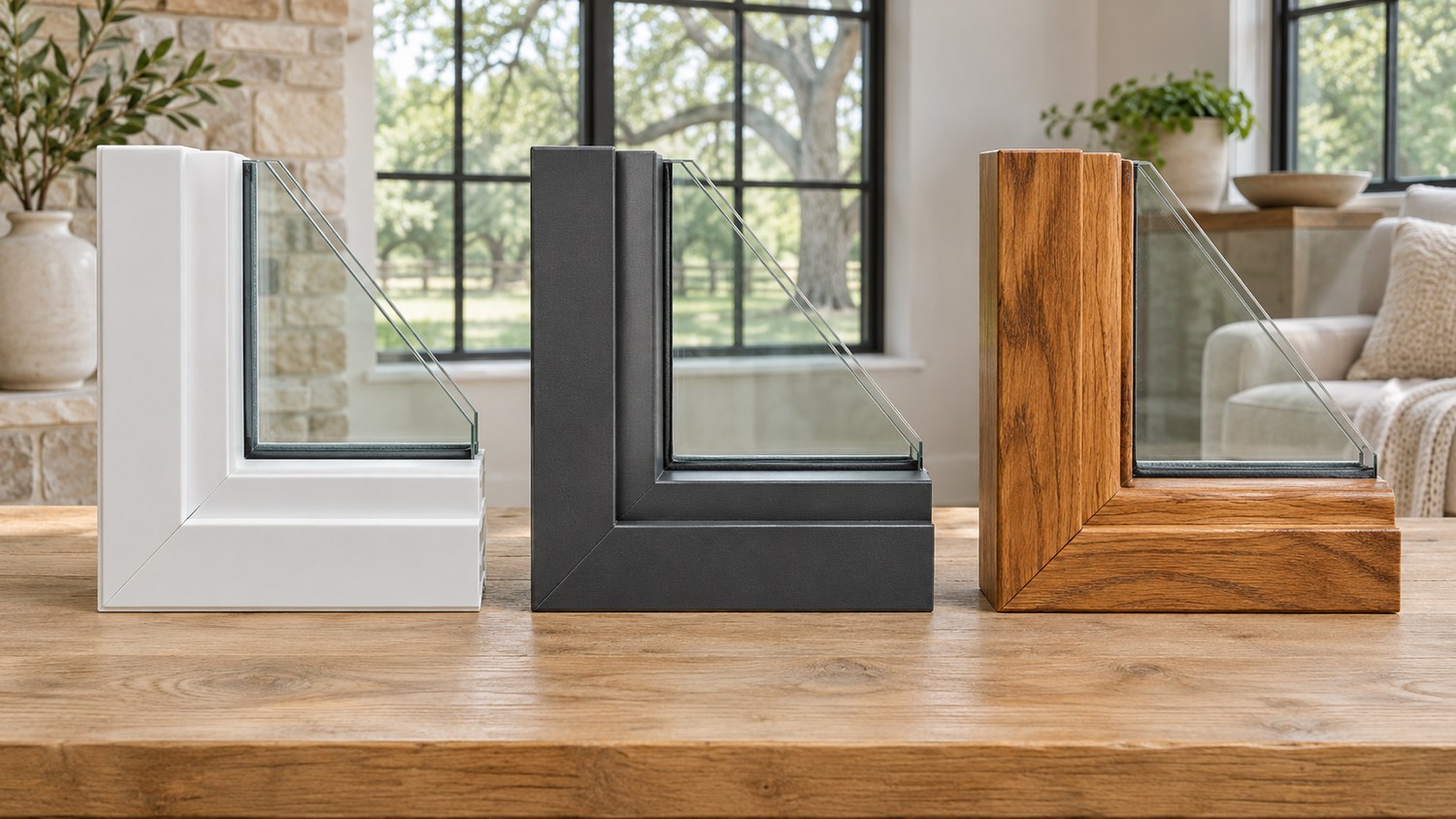
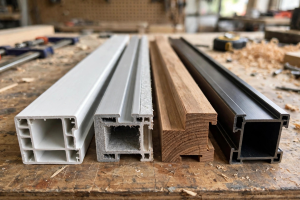
Illustration of three frame finishes. Ask to see samples of the actual product lines you’re considering.
Comparing options for a project of four or more windows?
Request a free in-home estimate
Are fiberglass windows worth the extra cost?
Yes, if a specific fiberglass model solves a problem you can point to, such as fitting an oversized opening, offering the narrow profile you want, or coming in a dark exterior finish in the right size. If a vinyl unit meets those same requirements, fiberglass may not add enough to justify the difference.
How to compare vinyl vs fiberglass replacement windows
Start with the hardest opening to match. A wide picture window facing a west patio, for example, may give you different options from a smaller double-hung window in a shaded bedroom. Compare sizes in the operating style you want, not just the widest unit in the brochure. A fixed window and an operable window from the same product line may have different limits.
For large windows or dark finishes, look at manufacturer documents for the actual options. Pella’s fiberglass guide shows why some fiberglass lines can accommodate larger glass and slimmer profiles. JBN’s vinyl and fiberglass comparison for North Texas heat goes deeper on sun exposure. If both options work, use the same opening list when you price vinyl vs fiberglass replacement windows. That lets you compare the material choice without quietly changing the installation scope or warranty.
How long do vinyl and fiberglass windows last?
Both quality vinyl and fiberglass windows can last for decades, but there’s no reliable lifespan you can assign from the frame material alone. The glass seal, moving hardware, exposure to sun and rain, and installation all matter. Compare what the manufacturer covers and ask what can be serviced if something fails.
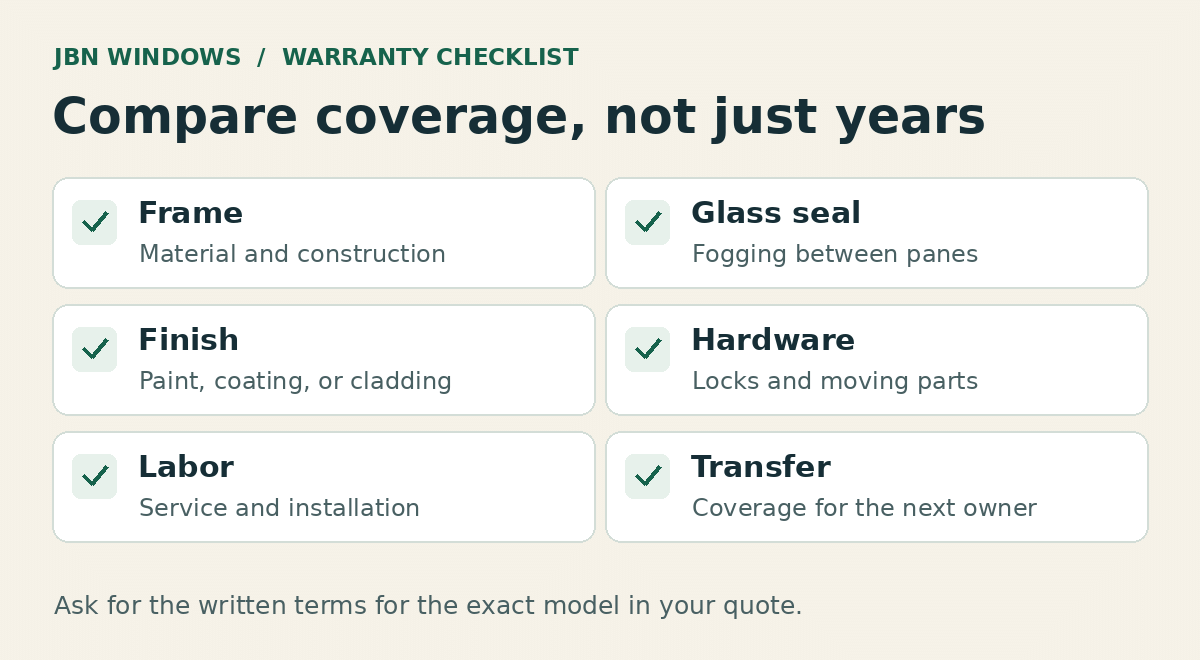
A warranty is a promise with terms, not a prediction of service life. Ask whether coverage differs for the frame, insulated glass seal, finish, and hardware. Check whether it includes labor and whether it transfers to another homeowner. Two warranties described as “lifetime” can cover different things.
Installation affects how well the unit works over time. A pocket insert can make sense when the existing frame is sound and square. A full-frame replacement exposes the rough opening so the installer can evaluate surrounding materials and address air and water management where needed. The DOE Building America replacement checklist explains what each method involves, including how flashing can tie into the wall. Ask which method the estimate includes for each opening.
Not sure which openings need full-frame work?
Request an in-home assessment JBN inspects the windows, frames, and visible surrounding structure before providing a written estimate.
Do fiberglass windows look better than vinyl?
No. Fiberglass can look better to you if you prefer a slim frame, larger-looking glass area, or a finish a particular line offers. Quality vinyl can also suit a home’s exterior. Compare samples against your brick, siding, and trim, and check how much glass you’ll see in the exact style and size.
Stand back from the house to judge exterior color and grid alignment, then look from inside to see how much of the view the frame takes up. Ask for an elevation drawing or actual frame dimensions if you’re replacing neighboring windows on the same wall. White and charcoal samples can look different in afternoon sun than they do under showroom lighting.
For a historic property or an HOA-controlled exterior, confirm the written requirements before ordering. They may govern profiles, grille patterns, colors, or materials. Wood can be the natural match for existing stained interior trim. Check any approval requirements for the home rather than assuming a material is always allowed or prohibited.
Are wood windows good for energy efficiency?
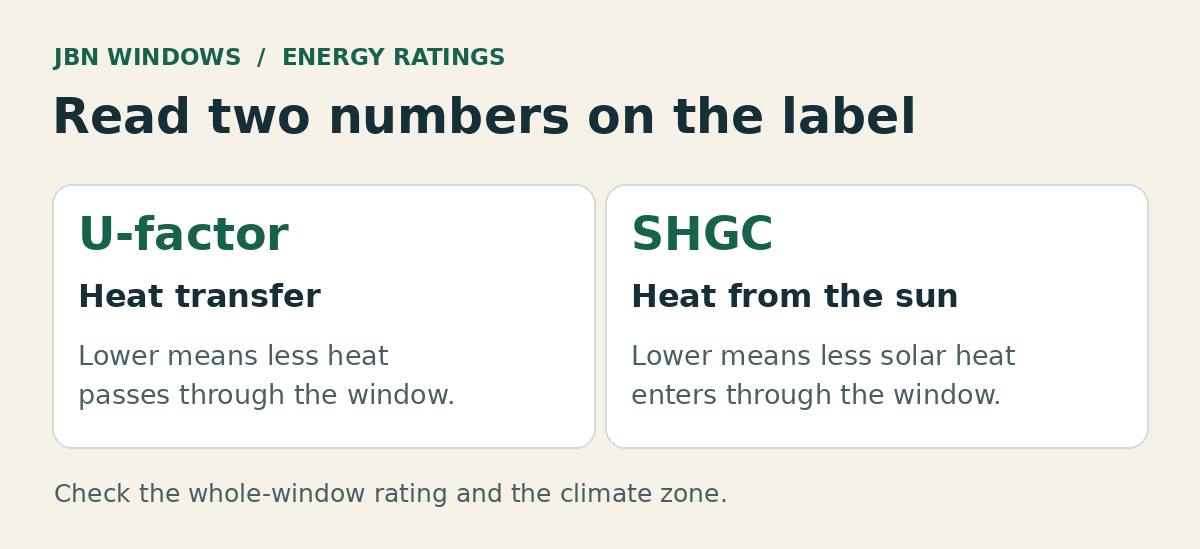
Yes. Wood can be a good insulating frame material, and well-designed wood or wood-clad windows can be energy efficient. Judge the entire window, including the glazing and frame, by its certified ratings. Compare U-factor for heat transfer and solar heat gain coefficient for how much solar heat enters through the window.
A lower U-factor means less heat passes through the window. A lower SHGC means less heat from the sun enters, which can matter in a North Texas room that gets hot in the afternoon. ENERGY STAR’s residential window guide explains how the NFRC label helps you compare products and how certification depends on climate zone. JBN’s energy-efficient window guide explains what to look for locally.
Cladding can protect the exterior of a wood frame while leaving real wood visible indoors. Ask how to maintain the interior finish and exterior joints. For any material, compare ratings for the same window style and glass package so you know what you’re paying for.
Have four or more openings you’re planning to replace?
Request a free, written in-home estimate
Frequently asked questions
Can I use different window materials on one house?
Yes. It can make sense to specify a different product for an opening with distinct size or finish requirements. Compare colors and frame profiles side by side before mixing products on a prominent wall.
Does a black exterior mean I need fiberglass?
No. Some vinyl lines also offer dark exterior finishes. Check availability for your window size and style, and ask what the manufacturer’s finish warranty covers.
Does JBN quote vinyl, fiberglass, or wood windows over the phone?
No. JBN measures and inspects the windows and surrounding structure at the home before writing the estimate. Vinyl is the primary offering, with fiberglass and wood available on request for replacement projects of four or more windows.