Best SHGC and U-Factor Ratings for Texas Windows
If your house feels hotter every summer even with the air conditioner running constantly, your windows may be allowing too much solar heat into the home. In Denton and across North Texas, homeowners often focus only on insulation, but SHGC windows Texas ratings usually have a bigger impact on indoor comfort because they control how much solar heat passes through the glass.
The best energy efficient windows Texas homes use are designed to reduce infrared heat, improve indoor comfort, and lower AC workload during long North Texas summers. Choosing the right balance between U-factor windows Texas ratings, Low-E coatings, and solar heat gain performance helps homeowners avoid overheated rooms, excessive glare, and rising cooling costs.
What U-Factor and SHGC Actually Mean
When comparing window performance labels, two numbers matter most: U-factor and SHGC.
U-factor measures how much heat transfers through the window. Lower U-factor ratings provide better insulation and help reduce heat movement during colder weather.
SHGC, or Solar Heat Gain Coefficient, measures how much solar heat passes through the glass into the home. Lower SHGC ratings block more solar heat, which is extremely important during Texas summers.
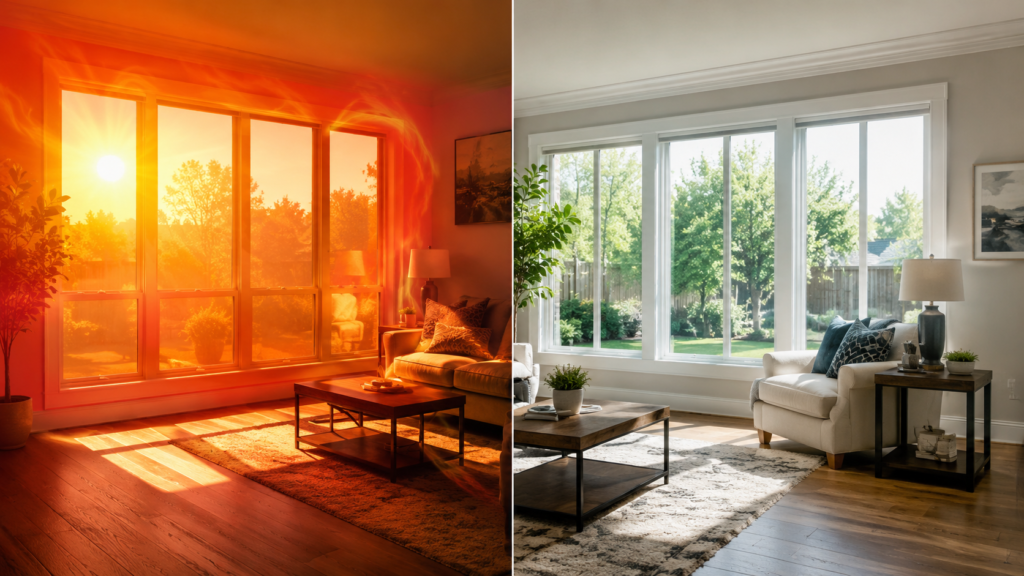
In North Texas, SHGC often matters more than ultra-low U-factor because solar heat gain creates far more cooling demand than winter heat loss. Homes with large west-facing windows commonly experience afternoon overheating when the glass allows excessive infrared heat indoors.
Low-E glass coatings also play a major role. These coatings help reflect solar infrared heat while still allowing visible daylight into the home. Combined with lower SHGC ratings, Low-E glass Texas homeowners choose can dramatically improve comfort during extreme summer temperatures.
Best SHGC and U-Factor Ranges for Texas Homes
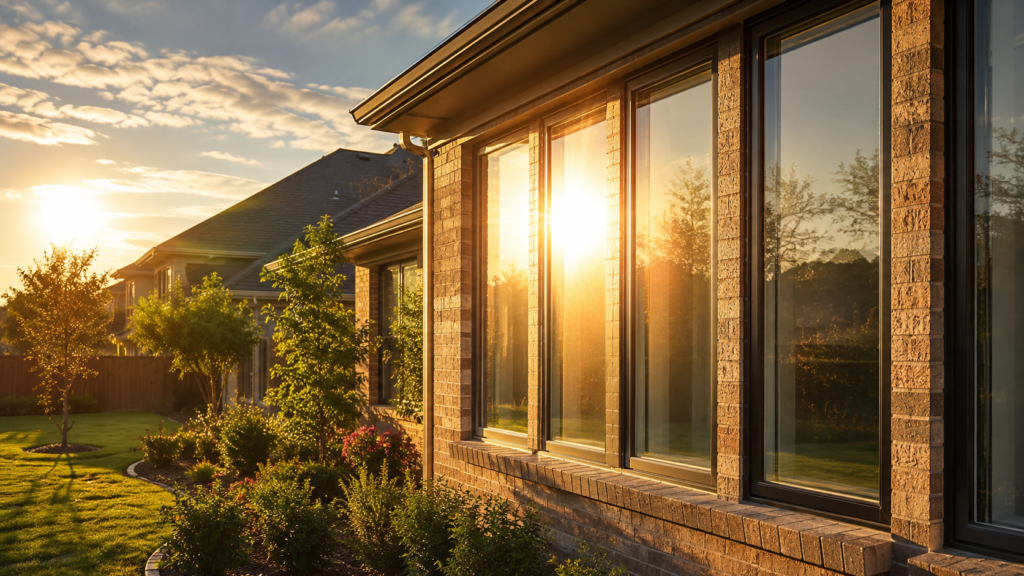
For most North Texas homeowners, the best-performing windows balance lower SHGC ratings with solid insulation values.
| Window Rating | Recommended Texas Range | Primary Benefit |
|---|---|---|
| SHGC | 0.20–0.30 | Reduces solar heat gain |
| U-Factor | 0.25–0.35 | Improves insulation |
| Air Leakage | Very low | Reduces drafts |
| Low-E Coating | Required | Reflects infrared heat |
Homes with heavy afternoon sunlight exposure usually benefit from lower SHGC values closer to 0.20–0.25. This helps reduce AC strain and improves comfort in west-facing rooms.
Balanced comfort setups often fall between:
- SHGC: 0.25–0.30
- U-factor: 0.28–0.32
The right combination depends on:
- room orientation
- tree coverage
- window size
- home insulation
- attic heat
- HVAC performance
Why West-Facing Windows Overheat Texas Homes
West-facing windows receive the strongest afternoon sunlight of the day. During summer in Denton and surrounding North Texas cities, that exposure can dramatically increase indoor temperatures.
Homes with large uncovered west-facing glass areas commonly experience:
- hotter rooms after 2 PM
- uneven temperatures
- higher cooling bills
- excessive glare
- furniture fading
- longer AC runtime
Lower SHGC windows help reduce infrared heat entering the home during peak afternoon exposure. Combined with quality Low-E coatings, they improve indoor comfort while still allowing natural light indoors.
This is one reason many homeowners searching for energy efficient windows Texas solutions focus heavily on SHGC performance rather than insulation numbers alone.
Why Triple-Pane Windows Are Not Always Better in Texas
Many homeowners assume triple-pane windows automatically outperform double-pane windows, but that is not always true in Texas climates.
Triple-pane windows are often designed primarily for northern states where winter insulation is the top priority. In North Texas, controlling solar heat gain usually matters more than maximizing insulation alone.
A properly designed double-pane Low-E glass package with a low SHGC can outperform heavier triple-pane units during long Texas cooling seasons.
The glass coating and solar control performance matter more than simply adding another pane of glass.
This is why many homeowners comparing U-factor windows Texas options focus on:
- Low-E coatings
- SHGC ratings
- solar control glass
- air leakage performance
- installation quality
rather than pane count alone.
Best Window Types for Texas Heat Reduction
Different window styles perform differently when it comes to solar heat control and air leakage.
Casement Windows
Casement windows often provide excellent sealing performance because the sash compresses tightly against the frame when closed. This helps reduce air leakage and improve efficiency.
Awning Windows
Awning windows can provide strong weather resistance and ventilation while helping limit direct rain intrusion during storms.
Double Hung Windows
Double hung windows remain popular for ventilation flexibility and traditional appearance. Higher-quality models with tighter weatherstripping perform significantly better than older builder-grade units.
Picture Windows
Picture windows allow large amounts of natural light but can also create major heat gain problems if the SHGC is too high.
The best energy efficient windows Texas homeowners install usually combine:
- low SHGC glass
- quality weatherstripping
- Low-E coatings
- professional installation
- proper frame insulation
Installation Quality Matters as Much as Glass Ratings
Even the best SHGC windows Texas homeowners buy can underperform if the installation is poor.
Common installation problems include:
- perimeter air leaks
- poor flashing
- weak insulation around frames
- uneven sash compression
- gaps around trim
These issues allow conditioned air to escape while letting hot outdoor air enter the home.
A quality installation should include:
- proper rough opening insulation
- square window alignment
- sealed perimeter gaps
- quality flashing
- low air infiltration performance
Without proper installation, even high-end energy efficient windows Texas homeowners purchase may fail to reduce cooling costs effectively.
How Low-E Glass Helps Reduce Cooling Costs
Low-E glass coatings are designed to reflect infrared solar heat away from the home while still allowing visible light indoors.
Benefits include:
- cooler indoor temperatures
- reduced glare
- lower AC workload
- UV protection
- improved comfort near windows
In North Texas, Low-E glass Texas homeowners choose often has a greater impact on comfort than extremely low U-factor ratings alone.
Combined with low SHGC values, these coatings help reduce heat buildup during long summer afternoons.
Choosing the Right Window Ratings for Your Home
There is no single perfect number for every home. The best setup depends on:
- room orientation
- amount of direct sunlight
- insulation quality
- HVAC efficiency
- shade coverage
- homeowner comfort goals
Most homeowners in Denton and North Texas see the greatest comfort improvement by prioritizing:
- lower SHGC ratings
- quality Low-E coatings
- low air leakage
- proper installation quality
before chasing extremely low U-factor numbers designed primarily for northern climates.
Conclusion
The best energy efficient windows Texas homeowners install are designed specifically for long cooling seasons, strong sunlight exposure, and heavy solar heat gain. In North Texas, lower SHGC ratings often improve comfort more than extremely low U-factor values because reducing solar heat helps decrease AC workload during extreme summer temperatures.
The right combination of Low-E glass Texas coatings, balanced insulation, and professional installation can dramatically improve indoor comfort, reduce overheating, and help lower cooling strain throughout the hottest months of the year.
For homeowners comparing window performance options, understanding SHGC windows Texas ratings and U-factor windows Texas values is one of the smartest ways to choose windows that actually match the Texas climate.