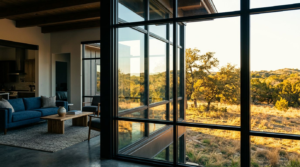
A house can still feel hot after window replacement because windows are only one part of the heat problem. In Denton TX and across North Texas, strong sun, attic heat, duct losses, air leaks, and the wrong glass package can keep rooms warm even when the windows are brand new. If the replacement units lack the right Low-E coating or SHGC rating, solar heat can still move indoors all afternoon.
Homeowners comparing local options can review DFW window replacement options to see how product choice and installation affect comfort. That makes it easier to spot why the house still heats up after noon.
Why can a house still feel hot after new windows?
New windows reduce one path for heat, but they don’t stop every source of heat in a home. When a house stays hot after window replacement, the problem often sits in the whole building, not only in the glass.
In Denton TX, west-facing rooms take a hard hit from spring through fall. Sun bakes the glass, walls, roof, and attic for hours. Even good windows can’t fully cancel that load if the attic above the room feels like an oven.
A second clue is where the heat shows up. If one bedroom or living room gets hot first, sun exposure is often the main issue. If the whole house feels warm by late afternoon, attic insulation, ducts, air balance, or HVAC performance may be doing more damage than the windows.
Humidity can make the problem feel worse. A home may be near the thermostat setting, yet it still feels sticky and warm. That doesn’t always mean the window replacement failed. It may mean the cooling system is struggling to remove heat and moisture at the same time.
If afternoon rooms still heat up fast, the sun may still be coming through the glass, or hot air may be leaking around the frame.
Window replacement helps most when the old windows were drafty, single-pane, or poorly sealed. Still, no window can fix attic heat, leaky ductwork, or direct sun on an unshaded west wall. That’s why some homeowners notice an improvement near the window but not across the whole room.
Did the glass package match the Texas climate?
Not all replacement windows are built for the same weather. Two windows can look almost identical and perform very differently in North Texas heat.
The biggest factors are Low-E coatings and SHGC, which stands for Solar Heat Gain Coefficient. Low-E coatings reflect part of the sun’s radiant heat. SHGC measures how much solar heat passes through the glass. In a hot climate like Denton TX, a lower SHGC often helps, especially on west and south exposures.
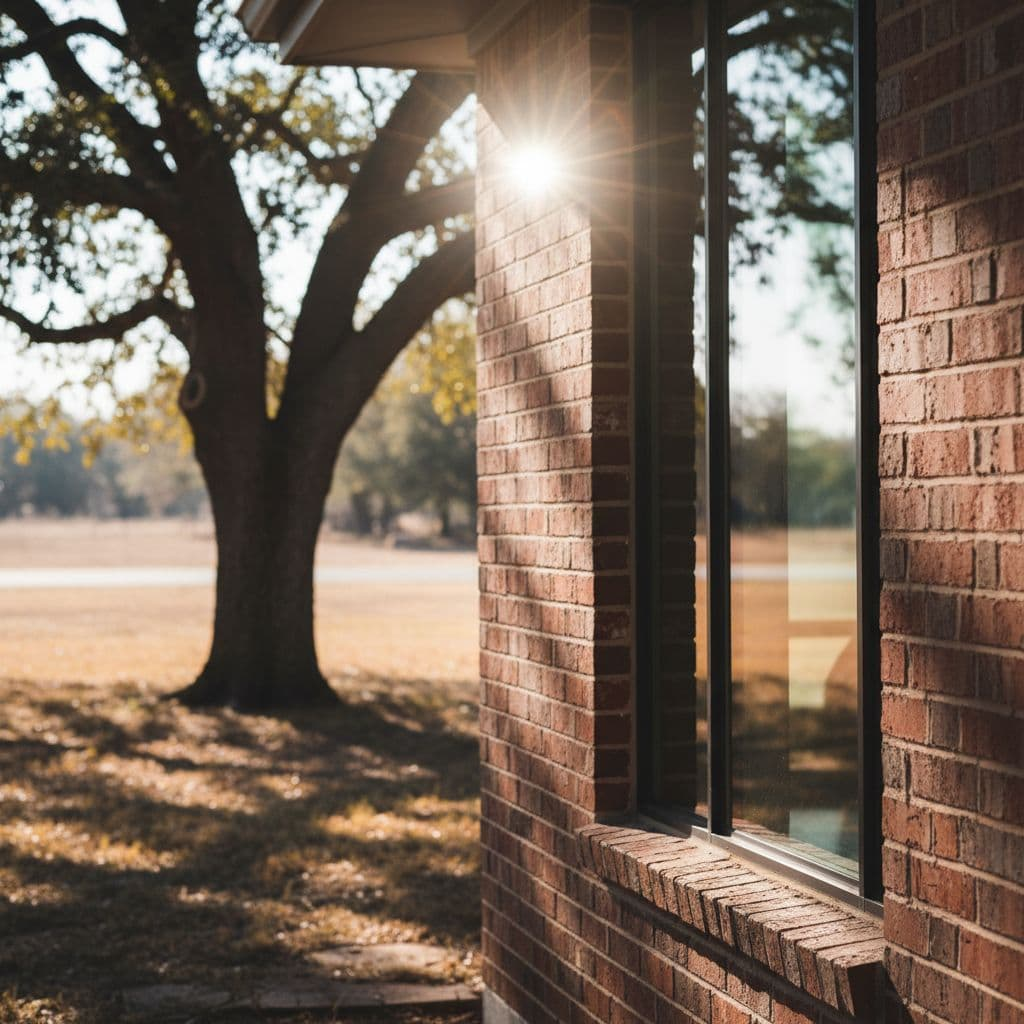
A common mistake is assuming that any double-pane unit is enough. It isn’t. Some replacement products have basic glass packages that improve comfort a little, yet they still let in too much solar heat. As a result, floors, furniture, and interior walls store heat and release it for hours.
That is why some homeowners say the room feels fine in the morning and then turns warm by 4 p.m. The windows may be new, but the glass may not be right for the exposure. In other words, the product is new without being optimized for the climate.
This quick comparison shows where performance often breaks down:
| Window feature | Why it matters in Denton TX | When it falls short |
|---|---|---|
| Low-E coating | Reflects radiant heat from long sun exposure | A basic coating may not block enough afternoon heat |
| SHGC | Limits how much solar heat gets through | A high SHGC lets west-facing rooms heat up fast |
| U-factor | Slows heat transfer through the unit | A good U-factor alone won’t stop harsh sun |
| Seal quality | Supports full glass performance | Weak seals reduce long-term efficiency |
The main takeaway is simple. Energy efficient windows are not one fixed product level. For Texas homes, solar control often matters as much as insulation value. A window can rate well on paper and still disappoint if the SHGC is too high for a room that faces direct sun all day.
Can installation problems cancel out good windows?
Yes, they can. A strong window installed poorly may still leak air, transfer heat around the frame, or leave gaps that let hot attic or wall-cavity air drift inside.
This shows up in a few common ways:
- A hot strip forms around the casing or drywall near the window.
- Blinds move slightly when the HVAC turns on.
- The sash is hard to lock or doesn’t sit square.
- One side of the room feels warmer than the rest, even after sunset.
A pocket insert can work well, but only if the old frame is sound and the opening is sealed correctly. If installers leave voids around the frame, skip insulation, or rely on a thin bead of caulk, heat can slip around the new unit. The glass may perform well while the perimeter underperforms.
Older metal frames can cause trouble too. If part of the original frame stays in place, it may conduct outdoor heat inward. That weak point matters in North Texas, where long sun exposure pushes exterior surfaces hard for months.
Proper installation usually includes accurate sizing, stable shimming, low-expansion foam or other approved insulation, and clean exterior sealing. If any of those steps go wrong, the room may still feel hot after window replacement.
For plain-language details on materials, timelines, and what installers should check, the window replacement FAQs page can help homeowners compare what they were promised against what was installed.
Another point often gets missed. New windows won’t feel cold or hot to the touch in the same way old single-pane units did, so homeowners may assume everything is sealed well. However, small leakage at the frame can still raise room temperature over several hours. That slow heat build-up is easy to miss until the hottest part of the day.
What else may be heating the house after window replacement?
In many North Texas homes, the attic is the biggest heat source by late afternoon. If attic insulation is thin or uneven, ceiling surfaces warm up and radiate heat into the rooms below. Meanwhile, ducts in a superheated attic can lose cooling before air ever reaches the vents.
That pattern is common in two-story homes around Denton TX. Upstairs rooms often stay hotter, even after window replacement, because the roof load and attic temperature overwhelm the gain from better glass.
Walls and doors matter too. A west-facing wall with little shade can store a lot of heat. An older exterior door can leak air. Recessed lights, attic hatches, and poor return airflow also make rooms harder to cool. When those weak points pile up, new windows help, but they don’t solve the whole comfort problem.
Expectations also matter. Some homeowners focus on window replacement cost first, which is fair, but price alone doesn’t predict comfort. A lower-cost window with the wrong glass package may leave rooms warm. On the other hand, a higher-cost unit won’t fix a home with attic bypasses and leaky ducts.
A simple pattern helps narrow it down. If only one or two rooms stay hot, sun exposure, shading, or window specs are likely involved. If the whole house struggles, the larger issue may be the attic, duct system, insulation, or HVAC setup.
Window coverings can help reduce solar load after the fact. So can exterior shade, solar screens, or trees. Those steps don’t replace a good window package, but they can cut the heat that keeps building through the afternoon.
Conclusion
When a house feels hot after window replacement, the new windows are not always the problem. More often, the issue is a mismatch between glass performance, installation quality, and the rest of the home’s heat load.
For Denton TX and North Texas homes, the best results usually come from the right Low-E coating, an SHGC that fits the room’s sun exposure, and tight sealing around every opening. If the house still runs warm, the next step is a room-by-room check of the windows, attic, ducts, and airflow.
Homeowners who want a clear answer instead of guesswork can call JBN Windows at 469-340-0834 for a no-pressure evaluation and a stronger plan for comfort.