
Insert Window Replacement: A Complete Guide to Pocket Replacement Windows, Costs, and Benefits
Understand how insert replacement windows work, who they’re best for, and what to expect for performance, price, and installation time.
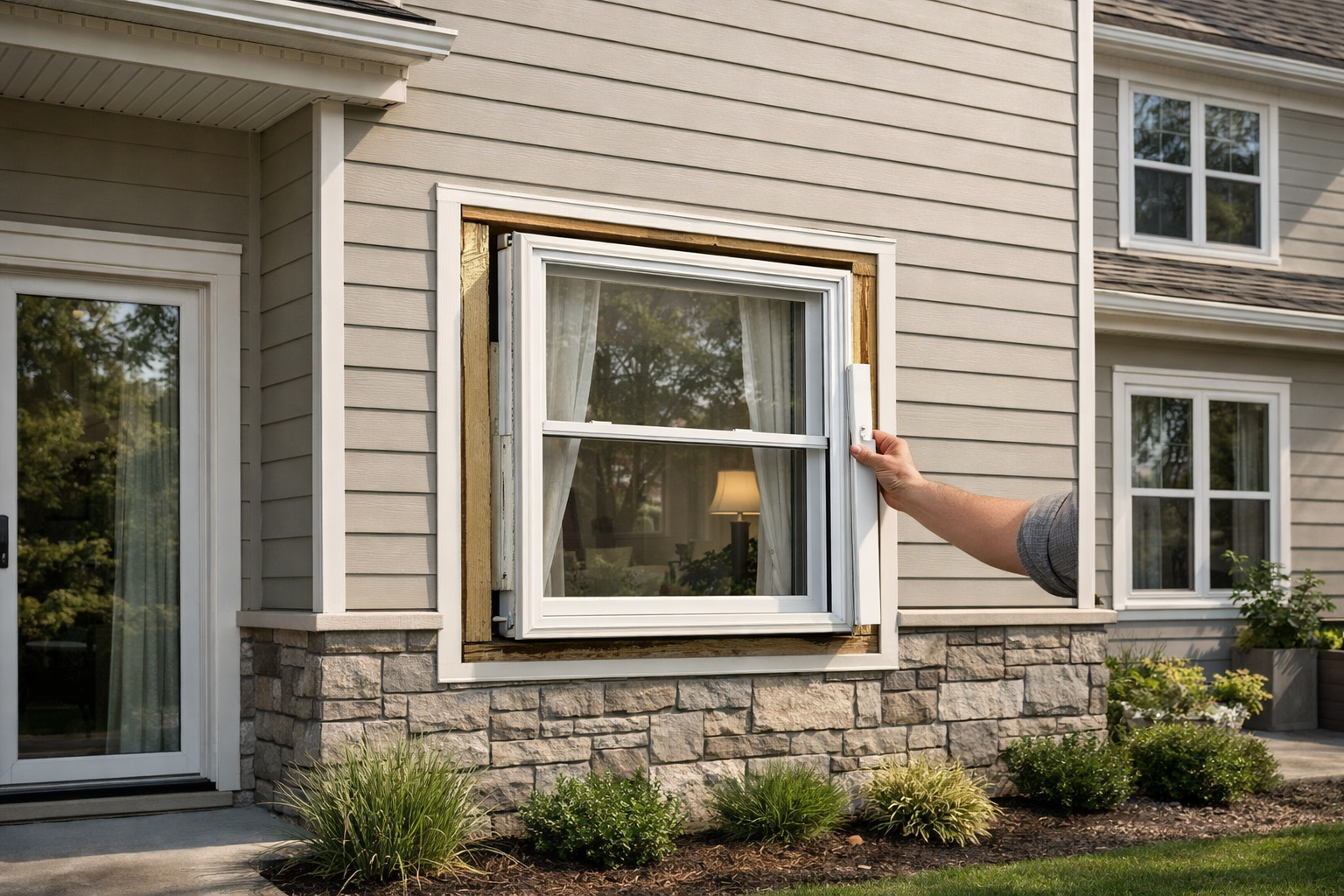
Insert Window Replacement (Pocket Replacement Windows): What It Is and When It’s the Right Choice
If your windows are drafty, hard to open, or driving up cooling bills, you’ll quickly run into two main options: insert window replacement (also called pocket replacement windows) and full-frame replacement. The best choice depends less on the brand name and more on what’s happening behind your trim—how solid the existing frame is, whether water management is working, and what you want to change (performance only, or the entire opening).
An insert replacement is often the “surgical” approach: you keep the existing frame and most surrounding finishes, and you swap in a new window unit that’s custom-fit to that opening. When the original frame is sound, this method can deliver a major upgrade in comfort and operation with less disruption—and usually a lower labor footprint than a full tear-out.
Key takeaway
Insert (pocket) replacement windows can be an excellent option when your existing window frame is structurally solid and you want a faster, less invasive upgrade. If there’s rot, flashing failure, or chronic water intrusion, full-frame replacement is often the safer fix.
This guide walks through what pocket replacement windows are, how they’re installed, realistic costs and value drivers, and the “green flags” and “red flags” that determine whether inserts make sense for your home. If you already know you need to compare insert vs full-frame in more detail, you may also want to read Full-Frame vs Insert Window Replacement in North Texas: What Fixes Gaps, Rot, and Old Frames Best?.
What Are Insert Replacement Windows (and Why They’re Also Called Pocket Replacements)?
An insert replacement window is a new, fully assembled window unit designed to fit inside your existing window frame. The existing frame becomes the “pocket” that holds the new window—hence the term pocket replacement.
In most homes, that means the installer removes the old operating parts (sashes) and any old storm windows, prepares the original frame, then sets and fastens a new window unit in place. Because the surrounding trim and finishes often remain intact, you can usually avoid (or greatly reduce) drywall work, exterior siding/stucco disturbance, and repainting large areas.
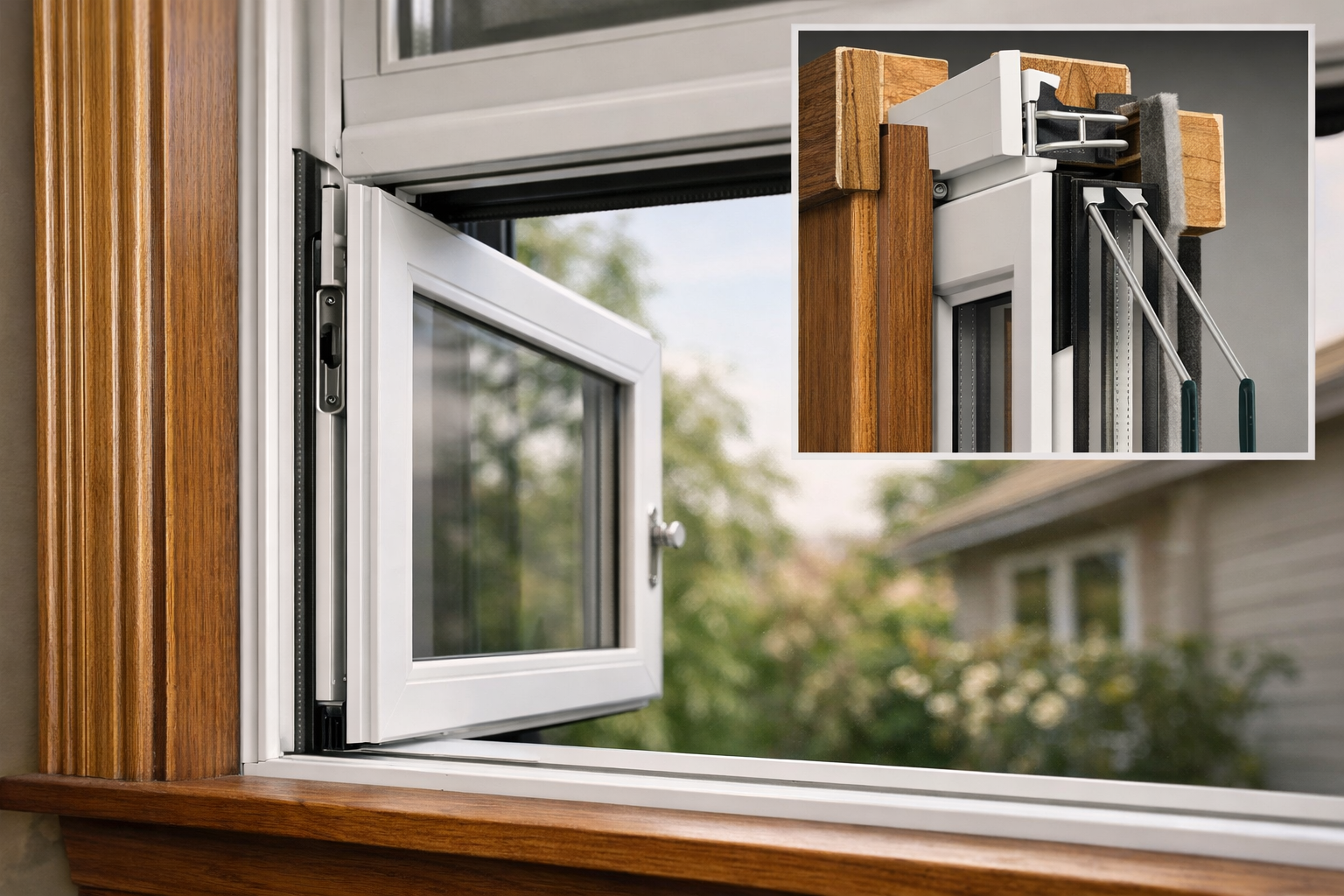
What stays and what changes in an insert replacement
- Typically stays: the original window frame, exterior trim/brickmold (in many cases), interior casing, and the wall around the window.
- Typically changes: the sashes, balances/springs, locks, weatherstripping, and glass package—essentially the “working window” portion.
- Often improves: ease of operation, air sealing, condensation resistance, noise reduction, and energy performance—assuming a quality product and a careful install.
The tradeoff: slightly less visible glass
Because the new unit sits inside the old frame, you’re “nesting” frame within frame. That usually reduces the visible glass area a bit. In practical terms, many homeowners don’t notice it room-to-room, but it can matter if you’re trying to maximize daylight or preserve a particular historic proportion.
Rule of thumb: Inserts are best when you’re happy with the existing opening and trim details, and you want a major performance and function upgrade without rebuilding the perimeter of the window.
If you want to understand how inserts compare with other common configurations (especially double-hung), the Oak Point Guide to Double Hung Window Replacements is a helpful companion read—many insert replacements are double-hung units, and the practical considerations overlap.
Insert vs. Full-Frame Window Replacement: Key Differences
Both options replace old, underperforming windows—but they solve different problems. The simplest way to think about it is scope:
| Category | Insert (Pocket) Replacement | Full-Frame Replacement |
|---|---|---|
| What gets removed | Old sashes/operating parts; original frame stays | Entire window unit removed down to rough opening |
| Best for | Solid, square, rot-free frames; you want to preserve existing trim/siding | Rot, flashing failure, chronic leaks, out-of-square openings, or you want to change size/style |
| Disruption | Usually lower; less finish carpentry and patching | Higher; may involve exterior and interior repairs/finishing |
| Performance opportunity | Can be excellent when sealed properly | Maximum opportunity to rebuild water management and add insulation around the opening |
| Glass area | Often slightly reduced | Typically maximized for the opening |
Why the frame condition matters so much
Pocket replacement is only as good as the structure it’s going into. If the existing frame is soft, bowed, water-damaged, or poorly flashed, an insert may hide symptoms without curing the cause. In those cases, full-frame replacement gives you access to the rough opening so you can correct underlying issues—especially moisture management and insulation gaps.
If you’re currently budgeting for a full-home project, you may want a broader pricing context alongside this insert guide. Two useful references are Full-Home Window Replacement Cost in Denton, TX: A Clear Breakdown and Denton Window Replacement Cost in 2026: Pricing Guide.
Pros and Cons of Pocket Replacement Windows
Pros: why homeowners choose inserts
- Less disruption and mess: Because interior casing and exterior finishes often stay in place, you can avoid large-scale patching, repainting, and siding/stucco work.
- Faster installation: Many insert installations are more predictable, especially when the opening is square and the frame is in good shape.
- Strong performance upgrades: Modern glass packages (like low-E coatings and gas fills) plus tighter weatherstripping can reduce drafts and improve comfort.
- Cost-effective when the frame is solid: You’re not paying to rebuild the entire opening—so labor and materials can be more contained.
- Preserves existing trim details: If your home has attractive casing, brickmold, or interior woodwork you’d rather not disturb, inserts can be a great fit.
Cons: what to watch out for
- Slightly smaller glass area: The “frame-within-a-frame” effect can reduce visible daylight.
- Not a cure for hidden damage: If there’s rot or water intrusion behind trim, inserts won’t automatically correct it.
- Limits on changing style/size: If you want to resize the opening or switch to a different configuration, full-frame is usually required.
- Quality depends heavily on measurement and sealing: A great window can still perform poorly if it’s not shimmed, fastened, and sealed correctly.
Practical decision filter
If your top priorities are preserving existing trim, getting a quicker install, and improving comfort without remodeling around the window, inserts are often a strong candidate. If your priority is fixing leaks/rot at the source, start by exploring full-frame replacement options.
If you’re unsure why some projects jump in price as scope changes, What Makes Window Replacement More Expensive? explains the biggest cost drivers (and why “simple” becomes “complex” once water damage or access challenges show up).
How the Insert Replacement Window Installation Process Works
A quality insert replacement is less about rushing and more about precision. Since the existing frame defines the opening, the installer’s job is to confirm the frame is a good candidate, measure carefully, and build a tight, durable seal between the new unit and the old structure.
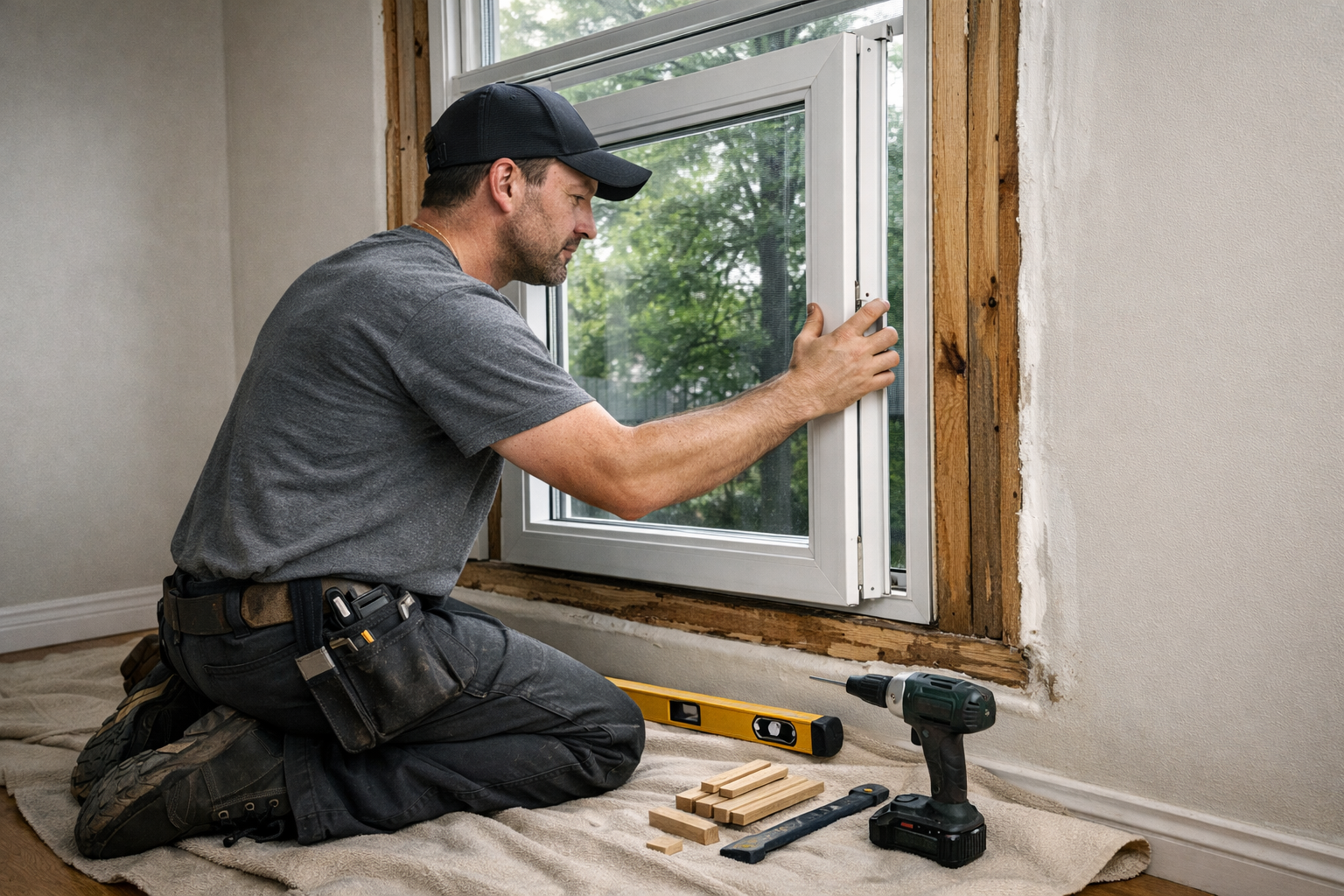
1) Inspection: confirm the frame can support an insert
Before any measuring, a good contractor checks for the issues that make inserts risky: soft wood, rot, evidence of ongoing water intrusion, and openings that are badly out of square. This is also where they evaluate whether your current trim layout and frame depth can accommodate the new unit cleanly.
Some common red flags include persistent staining, spongy sill wood, recurring condensation problems tied to air leakage, and visible gaps that suggest the frame has shifted.
2) Measuring: more than just width × height
Insert windows are custom-fit, so the measurement process is critical. Installers typically measure:
- Width at top/middle/bottom
- Height at left/center/right
- Diagonals to check squareness
- Frame depth to ensure the insert and interior stop details work
This is where an experienced installer earns their keep: they plan for shimming space and sealing—not a “perfectly tight” fit that leaves no room for adjustment.
3) Removal and prep: clean, stable, seal-ready surfaces
Typically, the old sashes and hardware come out first. Then the installer preps the existing frame by removing debris, addressing minor surface issues, and ensuring the sill area supports good drainage and a consistent seal.
If there’s localized minor damage that can be properly repaired (not concealed), this is the time to do it. If the damage is extensive, the scope may shift toward full-frame replacement.
4) Setting the new insert: shim, fasten, seal
The new window is set into the opening, then carefully adjusted to be level, plumb, and square. Shims help maintain those alignments under fastening pressure. Finally, the perimeter is sealed to reduce air and water infiltration.
A well-installed insert should operate smoothly, lock without forcing, and have even reveal lines (the small, consistent gaps around sashes). If it binds or “springs” when you lock it, it’s often a sign of racking or over-fastening.
5) Finishing and verification: the details that prevent callbacks
Good crews don’t stop at “it fits.” They verify operation, check weatherstripping contact, confirm clean caulk lines, and finish any minor trim touch-ups. This is also where they confirm you understand basic care: cleaning weep paths, safe operation, and what normal condensation looks like versus a seal failure.
What “good” looks like after installation
- Sashes glide without sticking or rubbing.
- Locks engage easily (no need to push/pull the sash to align).
- Consistent gaps/reveals; no obvious tilt.
- Continuous sealing on the perimeter; no missed corners.
- Trim is reinstalled cleanly (if disturbed) and caulk lines are neat.
Costs, Value, and What Affects Pricing for Insert Replacement Windows
Insert replacement windows can be a strong value because they often reduce labor and finishing work. But pricing is still highly variable because “insert replacement” describes the method, not the materials, performance package, or complexity of your home.
The biggest pricing factors (what actually moves the number)
- Window size and configuration: Larger units and specialty shapes typically cost more than standard sizes.
- Frame material: Vinyl is often cost-effective; wood, fiberglass, composites, and premium-clad options typically move higher.
- Glass package: Upgrades like low-E coatings, laminated glass for sound, or improved solar control can change cost and comfort noticeably.
- Hardware and build quality: Better balances, locks, and reinforcement often mean better long-term operation and tighter air sealing.
- Condition of the existing frame: A clean, solid frame is straightforward; a borderline frame requires more prep or a change in approach.
- Access and logistics: Second-story work, tight landscaping, and difficult interior access affect labor time and safety setup.
What “value” looks like beyond the invoice
Most homeowners are ultimately paying for outcomes: fewer drafts, more stable indoor temperatures, less outside noise, and windows that open easily and lock securely. Higher-quality inserts can deliver those outcomes more consistently—especially when paired with good air-infiltration ratings and a glass package aligned with your sun exposure.
In North Texas conditions, upgrades that reduce heat gain can translate into comfort improvements you feel right away—particularly in rooms with afternoon sun. Even if the energy savings alone don’t “pay back” instantly, the lifestyle benefits often justify the choice.
For an even clearer view of cost ranges and why different homes land in different brackets, Window Replacement Cost Per Window in Denton, TX provides a useful baseline, and Window Installation Services in Denton, TX (2026 Guide) helps set expectations on what a professional install includes.
Avoid “surprise scope” with one step
The fastest way to prevent cost surprises is an on-site evaluation that confirms frame condition. If the frame is sound, insert pricing is usually more predictable. If rot or flashing issues show up, the project may need full-frame work to fix the cause, not just the symptoms.
When Insert Replacement Windows Are (and Aren’t) the Best Choice
Choosing inserts is mainly about matching the solution to the problem you’re trying to solve. Here’s a practical way to evaluate your situation.
Insert replacement is often a great fit when…
- The existing frame is solid and rot-free: No soft wood, no chronic leaks, no long-term water staining that suggests an active problem.
- You want to preserve interior casing or exterior finishes: Especially valuable on homes with trim details you like or masonry exteriors you don’t want disturbed.
- Your main issues are comfort and operation: Drafts, sticky sashes, poor locking, rattling, or outdated glass performance.
- You want a faster, less invasive project: Inserts can reduce disruption, particularly if you’re living in the home during the work.
Insert replacement may not be the best choice when…
- There’s visible rot or soft framing: If you can press into wood and it gives, you likely need repairs that inserts won’t address.
- You see recurring water stains or moisture damage: That’s often a sign of flashing or water management failure that should be corrected at the rough opening.
- The opening is out of square: A badly racked opening can force compromises in operation and sealing.
- You want to change the window size or style significantly: Enlarging, reducing, or changing the opening generally requires full-frame and carpentry at the rough opening.
If you’ve been “waiting one more season” while drafts, leaks, or sticking get worse, it can become more expensive later—especially if water damage expands. If timing is part of your decision, see Window Replacement North Texas Timing: How Long Can You Wait Before It Costs You More?.
A simple checklist you can use before scheduling an estimate
- Look for soft spots: Press lightly on interior sill corners and lower frame areas (don’t damage finished wood). Softness is a red flag.
- Check for repeat staining: Stains that return after cleaning/painting often indicate ongoing moisture.
- Operate the window: If it sticks badly, won’t lock, or shifts when you lock it, the frame could be distorted.
- Notice drafts and hot zones: If you feel strong air movement or intense heat near the frame, sealing and glass upgrades may help—if the frame is sound.
- Decide what you want to change: If you want a new look, new size, or major trim changes, discuss full-frame from the start.
A helpful performance metric to ask about
Ask for the window’s air infiltration rating and how the installer will seal the perimeter. Comfort issues are often less about the glass alone and more about unwanted air movement. A tighter system can make a noticeable difference—especially in windy conditions.
Frequently Asked Questions About Insert (Pocket) Window Replacement
Do pocket replacement windows always reduce my glass area?
Usually, yes—at least slightly—because the new unit sits inside the old frame. The reduction varies by product and by how thick the existing frame is. A good contractor can often show you expected sightlines before you commit.
Are insert replacement windows energy efficient?
They can be very efficient, especially with modern low-E glass and strong weatherstripping. Performance depends on both the window’s ratings and the quality of the installation (shim, fasten, and seal details matter).
How do I know if my frames are “good enough” for inserts?
A professional inspection is the best answer. As a homeowner, look for soft wood, persistent moisture staining, and openings that seem distorted (windows won’t lock without forcing, sashes rub badly, visible gaps). Any of those may point toward full-frame work.
How long does an insert replacement typically take?
Time varies by home, access, and number of windows. Inserts are commonly faster than full-frame because they reduce demolition and finishing work, but the installer still needs time to measure, set, and seal each unit correctly.
What if I’m comparing insert replacement vs full-frame and I’m still on the fence?
Ask the estimator to explain what they see at the frame and how they would handle any water management concerns. If there’s any sign of ongoing moisture issues, it’s often safer to prioritize fixing the opening rather than just swapping the operating window.
Conclusion: Choosing the Right Replacement Approach
Insert window replacement (pocket replacement) is a smart, efficient option when your existing frames are sound and you want meaningful upgrades with less disruption. You can often gain tighter sealing, smoother operation, and better glass performance—without disturbing the surrounding finishes.
The key is making sure the existing frame is truly a good foundation. If there’s rot, flashing failure, or chronic water intrusion, full-frame replacement may be the better long-term fix because it lets the installer address the root cause, not just the visible window.
If you’re ready to confirm what your home needs, the next best step is a quick on-site evaluation to check frame condition and talk through options.
Get Your Quote for Insert Window Replacement
Call 469-340-0834 or request pricing online to confirm whether insert (pocket) replacement windows are the right fit for your home.