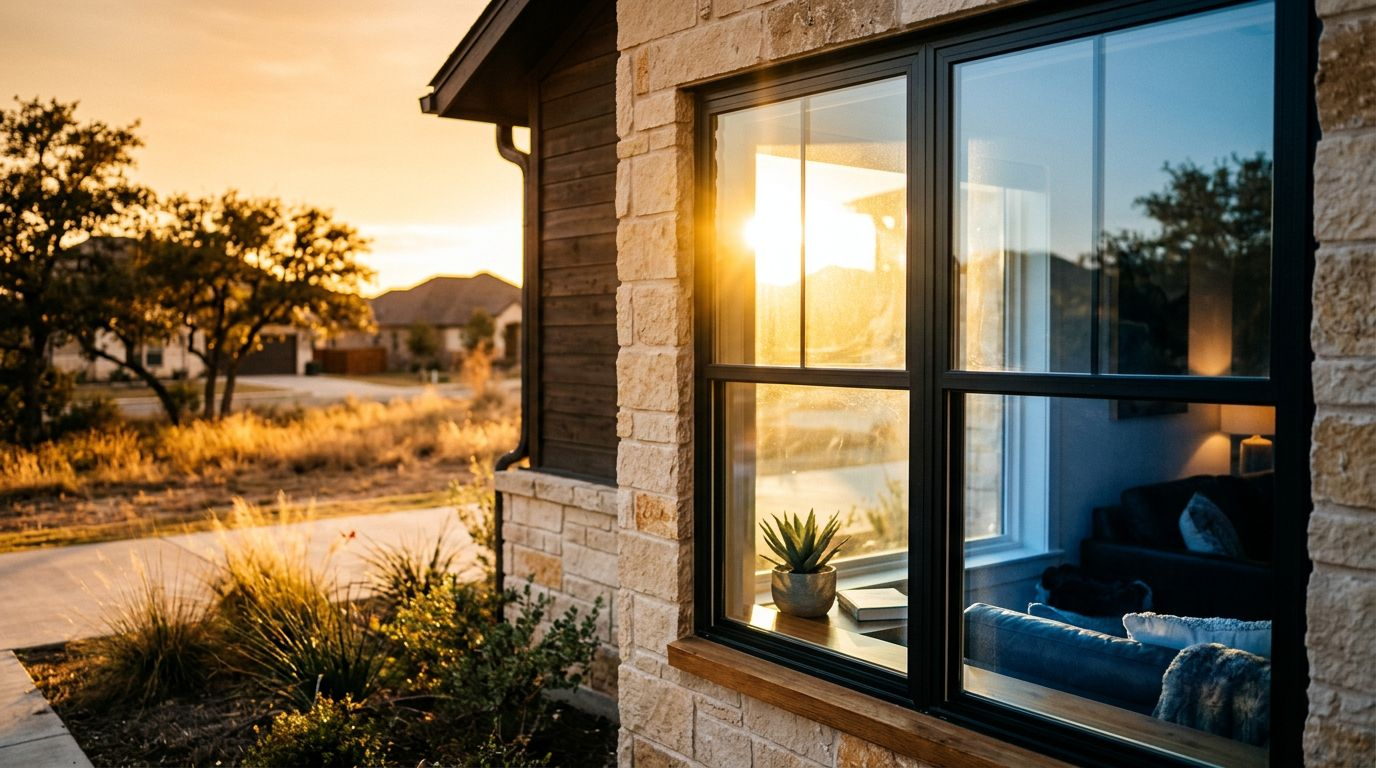
The best windows for Texas heat combine low SHGC glass, Low-E coatings, insulated frames, and tight seals. In most Denton and North Texas homes, vinyl or fiberglass replacement windows with double-pane Low-E glass perform best. Fixed picture windows, well-built casement windows, and quality single-hung models usually block more heat than old aluminum, builder-grade, or loose-fitting units.
That choice still depends on sun exposure, room direction, and installation quality. Homeowners comparing window replacement Denton TX options should match the frame, glass, and style to North Texas weather, not only the lowest quote.
What makes a window work in Texas heat?
A good Texas window does two jobs at once. It slows heat transfer, and it limits solar gain. Both matter because Denton homes deal with long hot seasons, bright afternoon sun, and HVAC systems that already work hard.
Older windows often fail in three places. The glass lets in too much radiant heat. The frame transfers outside heat inward. The sash or meeting rails leak air around the edges. When all three happen together, one room can feel hot by midafternoon even though the thermostat shows a normal setting.
Sun direction matters, too. West-facing and south-facing windows usually take the hardest hit in North Texas. Those rooms often need the best glass package in the house. Meanwhile, a shaded north-facing room may not need the same level of solar control.
That is why “windows for Texas heat” is really a performance question, not a style trend. A large picture window can work well if the glass has a low Solar Heat Gain Coefficient. A smaller window can still perform poorly if the frame leaks or the coating is weak.
Installation also decides how much comfort a homeowner gets after window replacement. Even strong glass loses value if the opening is out of square, the insulation is thin, or the exterior seal fails under summer expansion. In Denton and across North Texas, the best result comes from pairing the right product with careful fitting and sealing.
Which frame materials hold up best in North Texas sun?
Frame material changes comfort, maintenance, and price. It also affects how well the window handles sun exposure year after year.
Vinyl is often the best value for hot Texas homes. Quality vinyl frames insulate well, resist moisture, and need little upkeep. They also help keep window replacement cost in check, which matters for whole-home projects. The catch is quality. Thin vinyl can warp or weaken faster under heavy heat, so the frame build matters as much as the material itself.
Fiberglass is one of the strongest choices for long-term performance. It handles temperature swings well and stays stable under intense sun. That stability helps the sash keep a tight seal, which can reduce air leakage over time. Fiberglass usually costs more than vinyl, but it often pays back in durability.
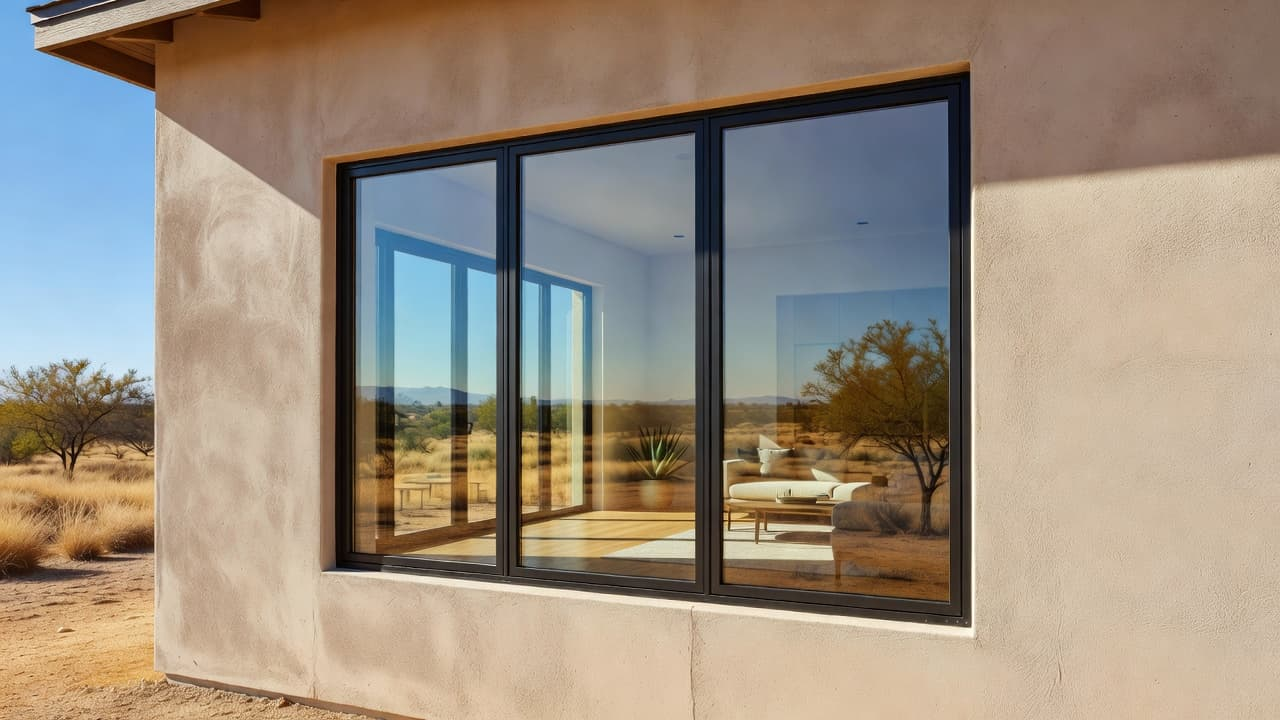
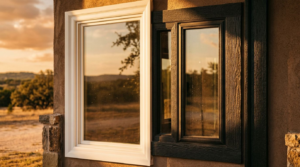
Strong sunlight tests the glass, the frame, and the seal at the same time.
Wood still appeals to homeowners who want a classic interior look. It insulates well, but it needs more upkeep in a climate with strong sun, storms, and seasonal movement. Wood-clad options can reduce exterior maintenance, although they usually raise the budget.
Bare aluminum is the weakest fit for most homes focused on heat control. It is strong, but it transfers heat fast. Thermal breaks improve that issue, yet many older aluminum windows in North Texas still make rooms hotter than they should be.
For most Denton homeowners, the best frame choice comes down to quality vinyl for value or fiberglass for long-term stability.
Which window types perform best on hot Texas homes?
Window style affects airflow, views, and cleaning. It also affects how tightly the unit seals. In heat-heavy climates, fewer moving parts usually means better thermal performance.
This quick comparison shows how common styles stack up.
| Window type | Heat performance | Best fit |
|---|---|---|
| Picture | Excellent, because it stays sealed | Living rooms, stairwells, large view areas |
| Casement | Very strong, because the sash presses tight when locked | Bedrooms, offices, west-facing rooms |
| Awning | Strong seal and good rain-friendly ventilation | Bathrooms, kitchens |
| Single-hung | Solid performance in a simple design | Whole-home replacement on a budget |
| Double-hung | Good, but more moving parts can mean more air leakage | Traditional homes needing easier cleaning |
| Sliding | Often weaker air sealing than hinged styles | Wide openings where projection is not practical |
Picture windows often rank near the top for hot climates because they do not open. No moving sash means fewer leak points. That makes them a smart choice for walls with heavy sun, especially when ventilation is not needed.
Casement windows are also strong performers. When locked, the sash pulls tightly against the frame. That can create a better seal than many sliders or older double-hung units. For bedrooms or offices that overheat in the afternoon, casements often make sense.
Single-hung windows give a solid balance of price and performance. They have fewer moving parts than double-hung windows, so they can seal a little tighter. That is one reason many homeowners pick them for practical window replacement projects in Denton.
Sliding windows usually sit lower on the list for heat control. They are useful in some layouts, but their track-based design often allows more air movement than a hinged unit. That does not make them bad. It simply means the glass package and build quality matter even more.
Why do Low-E glass and SHGC matter so much?
Glass choice often matters more than homeowners expect. In North Texas, the right coating can change how a room feels every afternoon.
Low-E glass has a thin coating that reflects heat while still letting in light. It helps keep indoor temperatures steadier, especially during long sun exposure. In summer, that coating reduces the amount of solar heat that enters the home. As a result, rooms can stay more comfortable without pushing the AC as hard.
SHGC, or Solar Heat Gain Coefficient, measures how much solar heat passes through the window. Lower numbers mean less solar heat gets inside. For many Denton homes, a lower SHGC is a smart target, especially on west-facing and south-facing glass.
Homeowners comparing energy efficient windows Denton TX options should look past broad marketing claims and check the ratings. A window can be called efficient and still be a poor match for Texas sun if the SHGC is too high.
Double-pane glass is the usual sweet spot for this climate. It gives better insulation than single-pane glass without the extra weight and cost that triple-pane can bring. Gas fills, warm-edge spacers, and better seals can also help, but they work best when paired with the right coating.
A darker tint is not always the answer. Too much tint can cut daylight and change the look of the room. The better goal is balance: less heat, good natural light, and performance that fits the side of the house.
How do heat-blocking features affect window replacement cost?
Window replacement cost rises with better materials, better glass, and more complex installation. That does not mean the most expensive option is always the best fit.
Frame material is a major cost driver. Fiberglass usually costs more than vinyl. Custom colors, larger openings, and specialty shapes raise the price as well. Then the glass package adds another layer. Low-E coatings, stronger seals, and lower SHGC glass can increase the quote, but they also target the exact problem most North Texas homeowners want solved.
Style affects cost, too. Picture windows are often simpler and can cost less than operable units of the same size. Casement windows usually cost more because of the hardware and tighter sash system. Full-frame replacement also costs more than an insert install, yet it can be the smarter move when the old frame leaks, shifts, or shows damage.
That is why a low bid can be misleading. If the package uses weaker glass, poor sealing details, or the wrong window type for a hot wall, short-term savings can lead to long-term frustration.
Homeowners who want a clearer budget can compare room priorities, sun exposure, and product tiers with the window replacement cost Denton TX guide. For many homes, the best value comes from spending more on the hottest elevations and choosing simpler units where the sun load is lower.
Conclusion
The best answer for Texas heat is rarely one feature by itself. The strongest results come from heat control glass, a low SHGC, an insulated frame, and a window style that seals tightly after installation.
In Denton and across North Texas, that usually points toward vinyl or fiberglass replacement windows with Low-E double-pane glass, chosen by room exposure instead of guesswork.
For homeowners ready to compare options, the next step is to get a free window replacement estimate and review the frame, glass, and installation scope side by side.