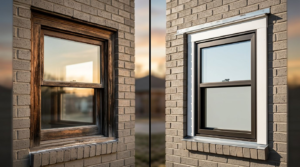
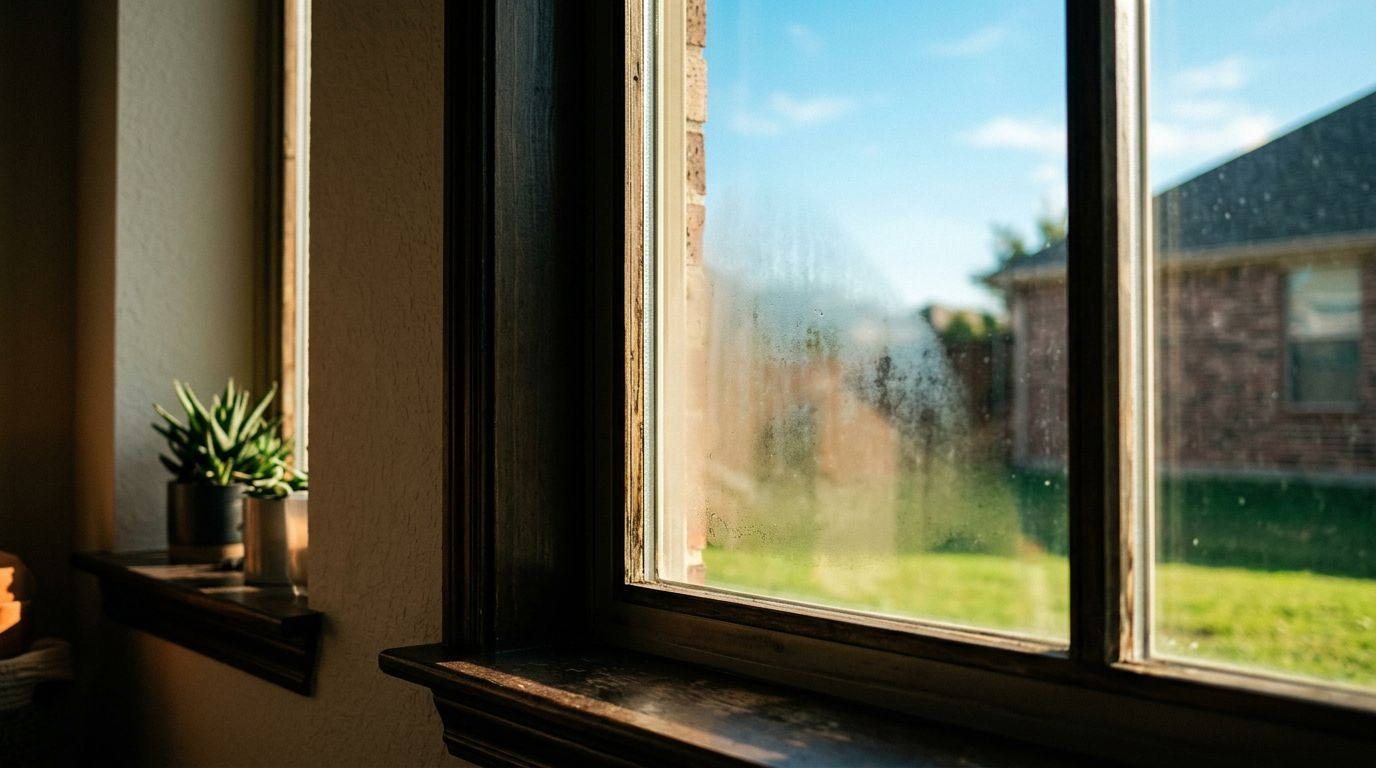
Failed window seals in North Texas usually show up as fog or moisture between glass panes, cloudy areas that never wipe away, rooms that heat up faster near the window, and higher summer energy use. In Denton homes, long sun exposure and wide temperature swings can wear down insulated glass sooner, especially on south-facing and west-facing windows. Once those signs appear, the seal rarely recovers on its own.
For homeowners comparing next steps, the window replacement Denton TX page gives a clear look at local installation options. The signs below help separate harmless surface humidity from real seal failure.
What are the clearest window seal failure signs?
The most common clue is fog between panes in a double-pane or triple-pane window. Because the moisture sits inside the insulated glass unit, normal cleaning does nothing. A homeowner may wipe the glass, step back, and still see the same dull film staring back.
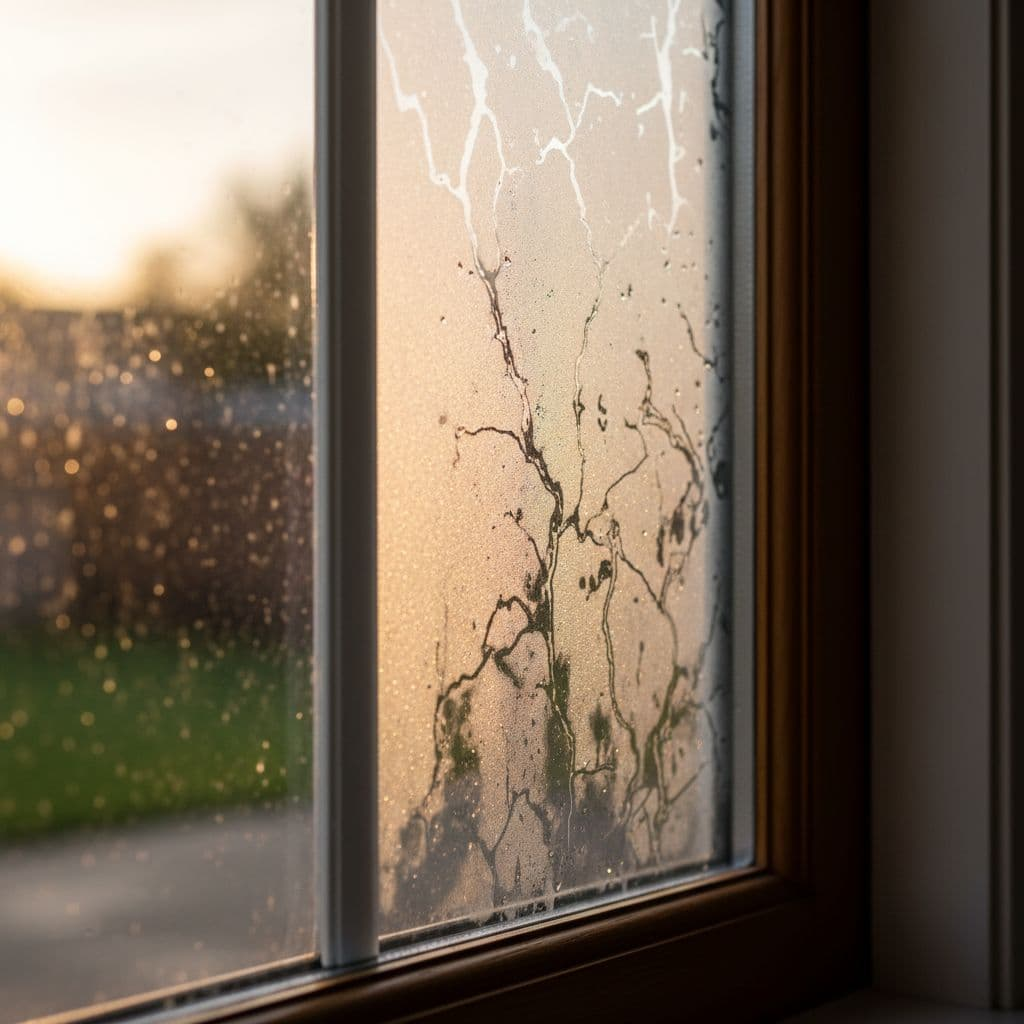
A failed seal can also look like streaks, a milky haze, or spots trapped inside the glass. On bright afternoons, the window may seem dirty even after a full cleaning. Some units look clear in the morning, then grow cloudy as the day heats up.
That detail matters because indoor humidity can look similar at first. Surface condensation forms on the room side of the glass and wipes away with a cloth. Seal failure stays trapped between the panes, so the cloudiness remains.
This quick comparison helps sort out the difference.
| What a homeowner sees | What it often means | Does it wipe off? |
|---|---|---|
| Fog or droplets between panes | The insulated glass seal has likely failed | No |
| Hazy streaks inside the unit | Moisture and residue are trapped in the glass space | No |
| Water on the room-side surface | Indoor humidity or a temperature gap | Yes |
The longer the seal stays broken, the worse the view usually gets. Moisture can leave residue inside the unit, and that film often lingers even when the weather changes. In older Denton homes, one west-facing bedroom window may fail first, then nearby windows start showing the same problem. When several units haze up over a short span, age and Texas sun are often part of the story.
Some homeowners also notice the room feels warmer near the glass. That change alone does not prove seal failure, but it often shows up beside visible fogging. When appearance and comfort shift at the same time, the window deserves a closer look.
Why do seals fail faster in North Texas?
Insulated glass seals work hard in this climate. In Denton and across North Texas, summer heat pushes glass and frames through constant expansion during the day. Then cooler nights pull them back. Over the years, that daily movement can stress the edge seal that holds the panes together.
Long sun exposure makes the problem worse. South-facing and west-facing windows take the hardest hit, especially in homes with little shade. Ultraviolet light also ages sealants, spacers, and some frame materials. As a result, older builder-grade windows often lose performance long before the frame fully fails.
Weather swings add more stress. North Texas can move from heavy humidity to dry heat within days. Storms bring wind and pressure changes, while shifting soil can move a house enough to nudge frames out of square. Even a small change in alignment can place more tension on the insulated glass unit.
Installation quality matters too. If a window was not set level, sealed well, or flashed correctly, air and water can work around the opening. That does not always cause the glass seal to fail by itself, but it can shorten the life of the unit. Poor exterior caulk, weak drainage, and frame movement can all speed up wear.
In many homes, the pattern is easy to spot. Upstairs rooms, big living room windows, and sun-heavy sides of the house tend to show trouble first. Therefore, North Texas homeowners often see window seal failure signs sooner on exposed elevations than on shaded sides of the same house.
How does a broken seal affect comfort and energy bills?
Once the seal fails, the window usually loses part of its insulating value. Many modern insulated units include argon gas between the panes. When the seal breaks, that gas can leak out over time while moist air moves in. The result is a window that no longer performs the way it did when it was installed.
That drop matters in Texas heat. A room with a failed unit often warms up faster in the afternoon, especially near large west-facing glass. The air conditioner may run longer, and the house can develop uneven temperatures from room to room. Some homeowners first notice the issue because a sunny bedroom feels hotter than the thermostat suggests it should.
If moisture sits between panes and never wipes away, the window is no longer performing as designed.
The glass package matters here. Low-E glass coatings help reflect heat and ultraviolet light. The SHGC, or Solar Heat Gain Coefficient, tells homeowners how much solar heat passes through the window. In North Texas, a lower SHGC often helps reduce unwanted heat gain, which can improve comfort during long cooling seasons. That is why many Denton homeowners move toward energy efficient windows when several seals fail at once.
Seal failure can also show up in smaller ways. Furniture and flooring near the window may fade faster. Hot spots may form along the wall. Rooms can feel stuffy by late afternoon, even when the HVAC system is working fine. Those symptoms do not always trace back to the seal alone, but they often line up with visible glass failure.
Homeowners who are comparing upgrades can review energy efficient windows Denton TX for glass options built for local heat and sun exposure. When several windows show haze, higher utility bills, and comfort issues together, the conversation often shifts from cleaning and caulking to real energy performance.
When does a failed seal call for repair instead of window replacement?
A failed insulated glass unit does not always mean the whole window needs to be replaced. If the frame is still solid, the sash opens well, and there are no leaks or drafts, a glass-only replacement may solve the problem. That approach keeps the existing frame and swaps out the sealed glass unit.
When glass-only replacement may make sense
This route can work for newer windows, especially when the model is still available and the frame remains square. It can also make sense when only one or two panes have failed and the rest of the house is performing well. In that case, replacing the insulated glass may restore the clear view and much of the original function.
When full window replacement is the better move
Older windows change the math. If the home also has sticking sashes, soft wood, broken balances, worn weatherstripping, or air leaks, full window replacement often makes more sense. The same is true when the glass seal has failed in several openings at once. A new insulated unit inside an aging frame may fix the fog, but it will not fix every comfort problem around it.
The bigger picture is cost over time. A low upfront repair can be reasonable for one newer window. Still, repeated glass issues, poor operation, and rising cooling bills can make piecemeal work more expensive than it first appears. Because every home is different, window replacement cost depends on size, style, material, glass package, and installation method. Full-frame work usually costs more than insert replacement, but it can solve frame and opening issues at the same time.
For homeowners weighing the numbers, the window replacement cost Denton TX guide explains the factors that shape pricing. When seal failure shows up alongside age, drafts, and heat gain, full window replacement is often the cleaner long-term answer.
Conclusion
In North Texas, a fogged pane is more than a cosmetic flaw. It is often one of the clearest window seal failure signs, and it usually points to lost efficiency, weaker comfort, and more heat pushing into the home.
The smartest next step is to look at the whole window, not the haze alone. A newer unit with a solid frame may need new glass. An older unit with fogging, drafts, and poor summer performance often points toward replacement.
Homeowners in Denton who want a clear answer can get a free window replacement estimate and find out whether the best fix is new glass or a full upgrade.