When your windows start leaking air, sticking, or showing water stains, it’s tempting to ask for a window installation with “replacement windows” and move on. In North Texas, that can backfire if the real problem is hiding behind trim, in a soft sill, or in a warped old frame.
The choice usually comes down to full-frame window replacement or an insert (pocket) replacement. Both can improve comfort and curb appeal, but only one reliably solves certain gap and rot problems. Here’s how to tell which one actually fixes your issue, not just covers it up.
Full-frame vs insert replacement, what you’re really buying
Insert window replacement (also called pocket window replacement) keeps your existing frame (the old jambs and sill) and installs a new window unit inside it. It’s faster and usually less disruptive to interior trim. The catch is simple: if the old frame is damaged, you’re building on a bad foundation.
Full-frame window replacement removes the entire window down to the rough opening (and often includes new flashing and waterproofing details). It costs more and can disturb trim, exterior siding, or brickmould, but it gives you access to fix hidden rot and air leaks at the framing level.
If your goal is to fix gaps, rot, and deteriorated frames, full-frame window replacement is often the clean fix because it lets you correct the structure, not just the window sash. For a plain-language overview of how the two methods differ, see This Old House’s full-frame vs insert explanation.
Symptom-to-solution: drafts, gaps, rot, and what fixes them
Not all “drafts” are the same. Some come through the moving parts of the window, others come from the wall around the window. That difference is what decides insert vs full-frame.
Here’s a practical mapping you can use before anyone starts selling you a package.
| What you notice | Most likely source | What usually fixes it best |
|---|---|---|
| Drafts at the meeting rail or sash edges | Worn weatherstripping, failing window hardware like loose sashes and balances | Insert can work if the window frame is sound |
| Cold air at the casing or baseboard | Gap between old frame and rough opening, missing insulation | Full-frame window replacement is best, inserts can’t reach it |
| Water stains under corners, peeling paint | Failed exterior flashing, wet sill, water damage, rot starting | Full-frame (and correct flashing) |
| Window won’t lock, looks “racked” | Frame out of square, bowed jambs | Full-frame, sometimes structural correction |
| Soft wood at sill or lower jamb | Rotting wood from long-term moisture | Full-frame, rot repair is required |
If you like the ventilation and cleanability of a classic vertical slider, you can pair either installation method with a window style like Double Hung Windows for North Texas Homes, including the double-hung window. The install method is still the bigger decision when frames are failing.
Hands-on inspection for North Texas rot and frame failure
You don’t need fancy tools to spot an existing frame that can’t support an insert replacement. You need time, good light, and a little skepticism.
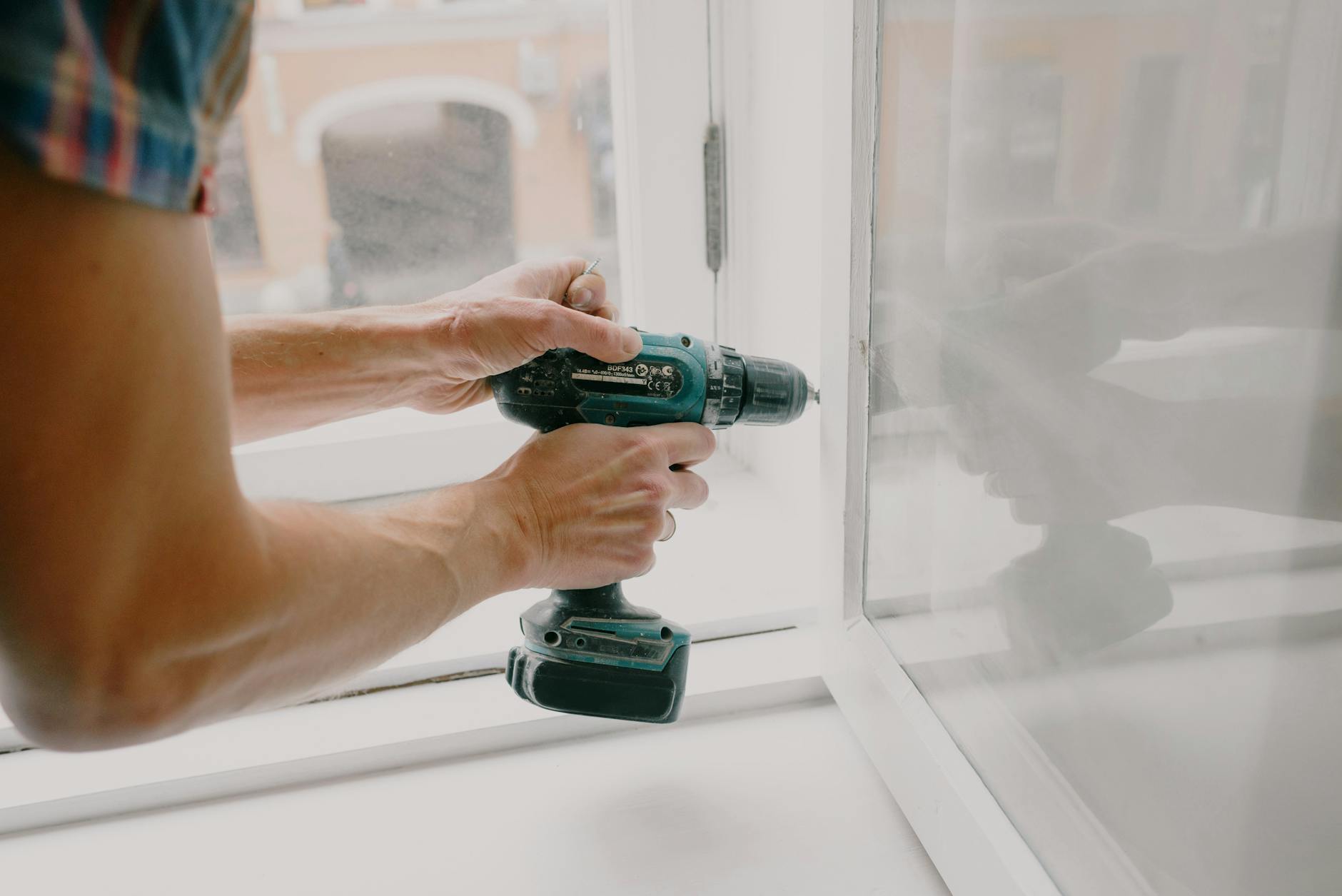
Photo by Ksenia Chernaya
Start inside:
- Look for moisture staining at the stool, drywall returns, or lower corners of the opening.
- Check paint and trim for bubbling or hairline cracks that keep coming back.
- Open the window and sight down the jambs of the existing frame. Bowed jambs often show up as uneven reveals or a sash that drifts.
Then do a quick probe test:
- Use a small screwdriver or awl and press into the sill and lower jambs of the window frame (especially near corners). Firm wood resists, rotten wood feels spongy and crushes.
- Pay attention to any “patched” spots on the window frame. Fresh caulk and paint can hide soft framing for a season, not a decade.
Findings that usually force full-frame window replacement: soft or crumbling sill/jamb material compromising the structural integrity, repeated water entry, visible daylight around the frame, or a frame that’s out of square in the window opening enough that locks won’t line up. In North Texas, shifting soils and wind-driven rain make those problems show up faster once they start.
When an insert replacement is enough (and how to air-seal it)
Insert window replacement can be a solid choice when your existing window frame is square, dry, and structurally sound. That’s common in homes where the glass has failed, the sashes are worn out, or you want better energy efficiency without disturbing interior and exterior trim as part of your home improvement project.
Two things matter if you go insert window replacement: measurement accuracy and air-sealing.
Ask how the installer will handle the air seal between the old frame and the new replacement windows. At a minimum, you want:
- Low-expansion foam or backer rod where appropriate (too much foam can bow frames), with the right sealant.
- A continuous interior seal at the stop or casing line, not spot caulk.
- Exterior sealing that respects drainage (you don’t want to trap water in the assembly), while preserving your interior and exterior trim.
Know the trade-off: inserts reduce glass area a bit because the new frame sits inside the old one. If you’re also changing styles for budget or simplicity, Durable Single-Hung Windows Denton TX offers vinyl windows as replacement windows that can fit either method, but the frame condition still decides what’s responsible.
If you’re planning a bigger visual change, like adding projection and structural support, that’s usually full-frame territory. Bay and Bow Windows in Denton TX typically require framing and waterproofing work you can’t do through an insert-only approach, even with retrofitting. For another contractor-oriented comparison, you can skim Brennan’s guide to full-frame vs insert replacement.
FAQ and rules of thumb before you schedule
Will an insert window replacement fix gaps between the frame and the wall?
Not reliably. If the leak is at the window opening, you usually need full-frame window replacement access to apply sealant and repair.
If you have rot, can you still do inserts?
Only if the rot is not in the window frame system you’re keeping, including window hardware. If the sill or jambs are soft, inserts are a shortcut that tends to fail.
Is full-frame replacement always “better”?
It’s more complete, but full-frame window replacement is also more disruptive to interior and exterior trim and exterior siding, with a higher cost of window replacement. If your frame is solid, inserts can be a clean solution that considers the cost of window replacement while preserving your window style and improving sound insulation.
Rules of thumb you can trust
- Soft wood equals full-frame, no debate, even if it raises the cost of window replacement.
- Drafts at interior and exterior trim lines point to full-frame air-sealing and flashing work.
- Sound, square, dry frames can justify inserts or replacement windows, if sealing and professional installation are done right, similar to a new construction window with nailing fin.
- If you’re unsure, schedule an evaluation through https://jbnwindows.com/window-replacement-services/ and ask the crew to show you what they find at the sill and jambs, including any insulation issues.
For one more perspective on how homeowners weigh these options, see Climate Seal’s full-frame vs insert overview.
Conclusion
If you’re trying to solve gaps, rot, and tired old window sashes in North Texas, the “best” option is the one that fixes the source of the problem. Full-frame window replacement is the sure fix when the frame is damaged, out of square, or leaking at the wall. Insert window replacement makes sense when the existing frame is still strong, dry, and straight; it targets the window sash and boosts energy efficiency with vinyl windows, provided you insist on careful air-sealing during window installation. The right call for your replacement windows should feel boring and obvious once you’ve probed the wood, checked the window sash, and traced where the air and water are getting in during window installation.