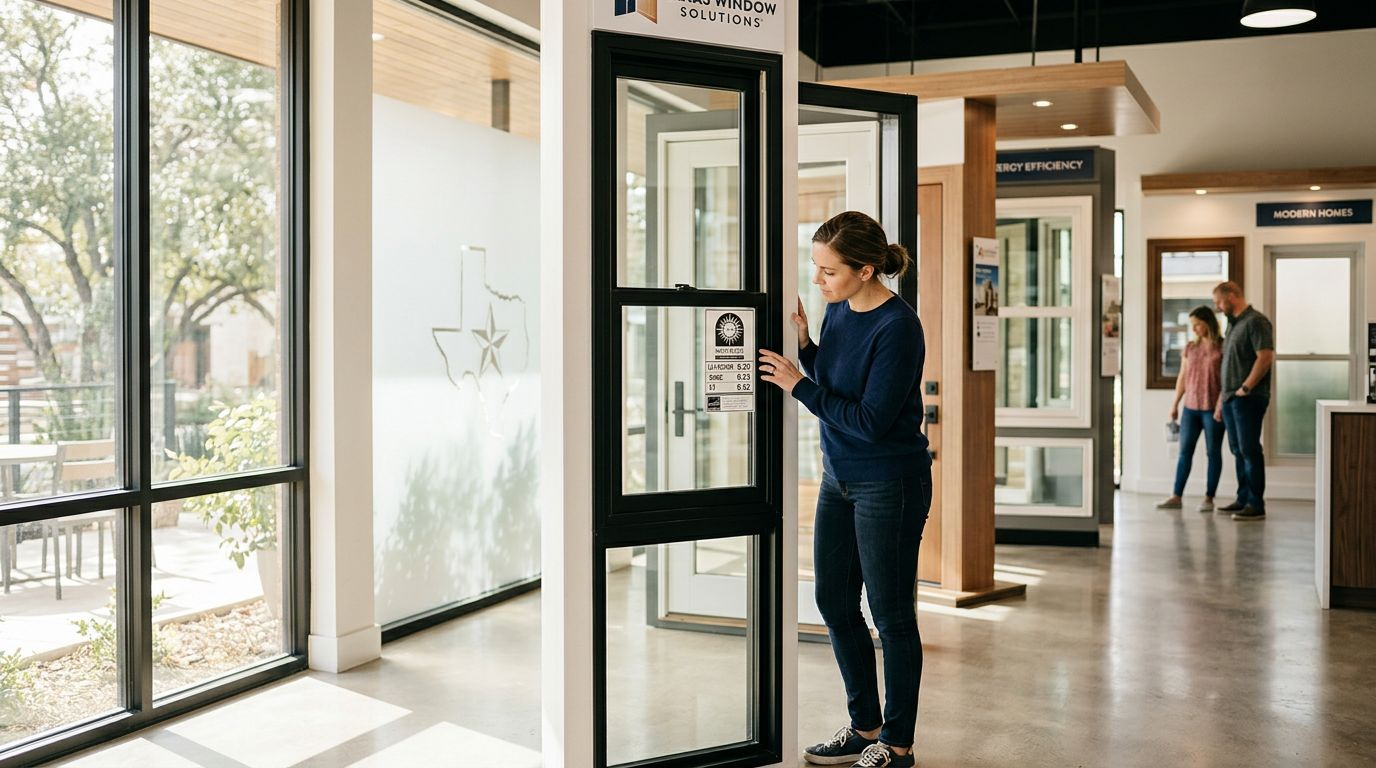
Shopping for replacement windows in Texas can feel like staring into the sun, too many choices, not enough clarity. The good news is the small sticker on the window, the NFRC label, can cut through most of the sales talk in about 60 seconds.
This guide walks you through practical NFRC label reading for real Texas homes. You’ll learn what each number means, which direction is usually “better” in Texas heat, and how to compare two windows without getting lost in the fine print.
Start with what the NFRC label really measures (and what it doesn’t)
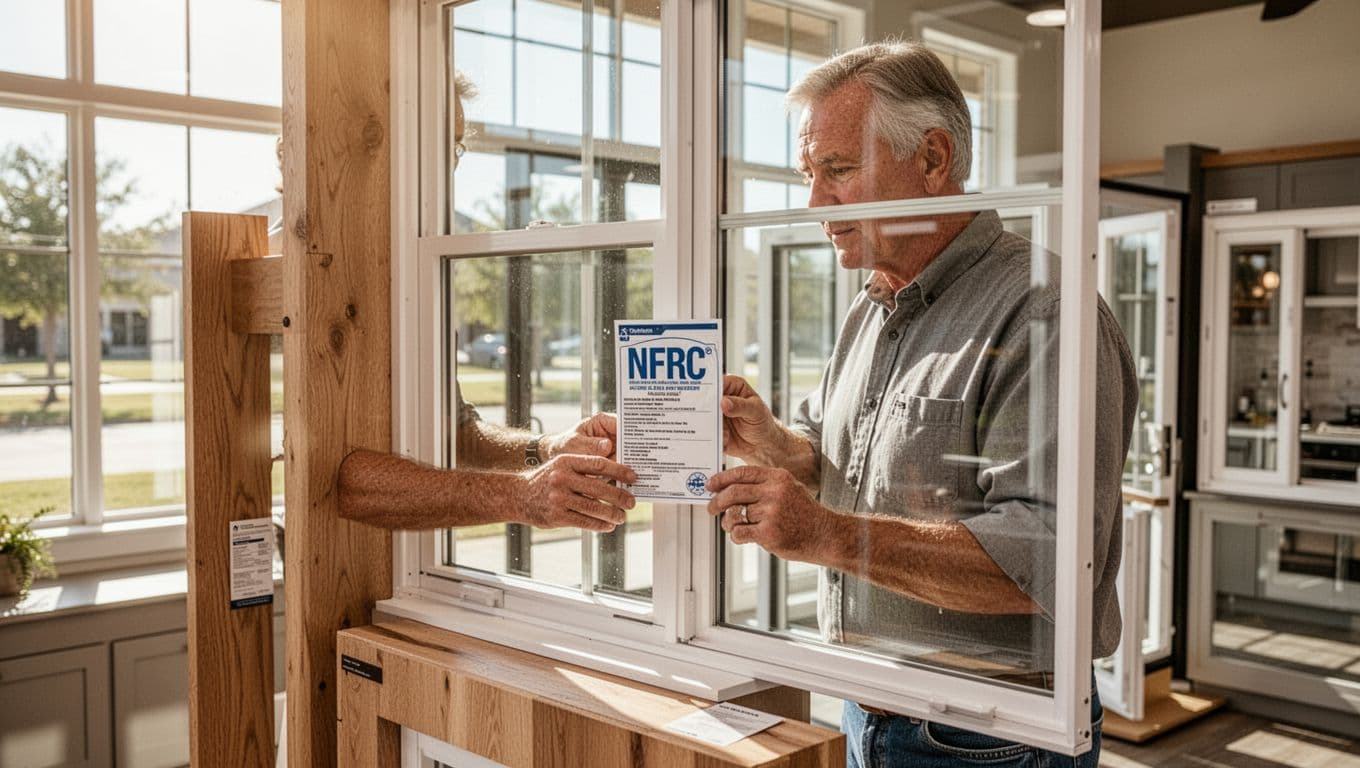
NFRC stands for National Fenestration Rating Council. The NFRC label is meant to give you apples-to-apples performance numbers, so you can compare different brands and styles fairly. It focuses on comfort and energy performance, not on looks, warranty, or installation quality.
Two points matter a lot for Texas shopping:
First, the numbers are typically for the whole window (glass plus frame), not just the glass. That’s important because a great glass package can still underperform in a weak frame.
Second, the label can change based on configuration. Grids, tint, triple-pane, and even size can affect results. When you compare, make sure you’re looking at labels for the same style and similar options. If you want a deeper explanation of the standard ratings, the U.S. Department of Energy breaks them down clearly in its guide to window performance ratings.
If you’re choosing between styles, it also helps to compare labels within the same category, for example, reviewing U-factor and SHGC for double-hung options on a page like energy performance labels for double-hung windows before you step into a showroom.
If the salesperson can’t show you the NFRC label for the exact window configuration you’re buying, you don’t have a clean comparison yet.
The five NFRC numbers you’ll see most, and what “better” means in Texas
Most homeowners only need to focus on a short list. Here’s a simple reference table you can screenshot.
| NFRC rating (what you’ll see) | What it means in plain English | Which direction is usually better | Why it matters in Texas sun and heat |
|---|---|---|---|
| U-Factor | How well the window resists heat flow (insulation). | Lower | Helps during cold snaps and reduces AC load year-round, especially at night. |
| SHGC (Solar Heat Gain Coefficient) | How much sun heat gets through the glass. | Lower | One of the biggest comfort drivers in Texas, especially for west and south windows. |
| VT (Visible Transmittance) | How much natural light you get. | Higher | Brighter rooms, but very high VT can come with higher SHGC on some products. |
| AL (Air Leakage) | How much air passes through the window assembly (if listed). | Lower | Lower AL usually means fewer drafts and less humidity creep in summer. |
| CR (Condensation Resistance) | How well the window resists interior condensation (higher is better). | Higher | Helpful in humid areas and bathrooms, also a comfort indicator near the glass. |
Think of SHGC like sunscreen for your house. A lower SHGC blocks more solar heat, which can keep rooms from feeling “baked” at 5 p.m. in August. Meanwhile, U-Factor is more like a jacket, it slows heat transfer both directions.
Still, you rarely pick just one number. In Texas, you typically aim for a low SHGC first, then get the best U-Factor you can within your budget. VT becomes your balancing dial, because you want comfortable light without turning your living room into a greenhouse.
For extra context on what’s printed on the label and how the industry uses it, see this overview on understanding the NFRC window label.
Two worked comparisons you can use in the store (Houston and Austin vs DFW)
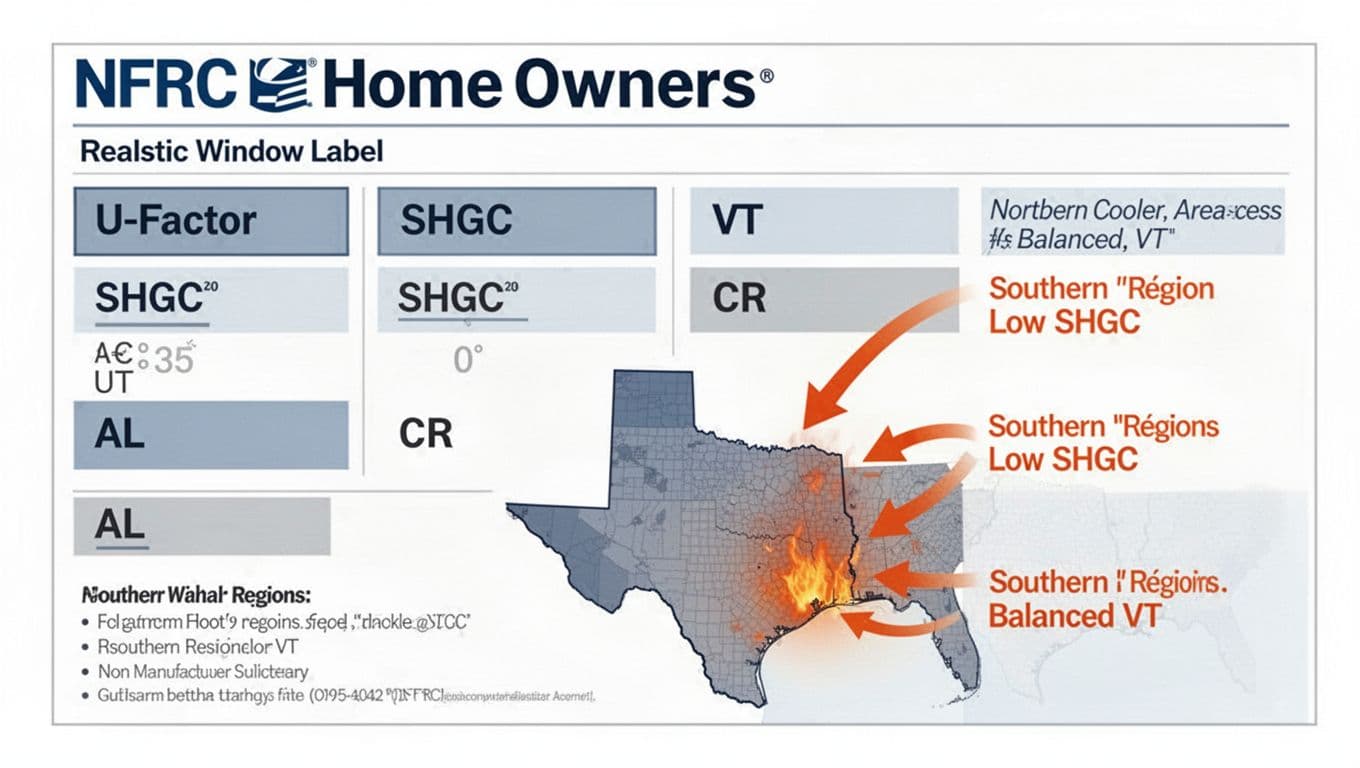
The fastest way to get confident is to compare two labels like you’re comparing nutrition facts. Below are two common Texas tradeoffs you’ll see.
Example 1: Lower SHGC vs higher VT (comfort vs daylight)
Assume both windows fit the same opening and cost about the same.
| Hypothetical label | U-Factor | SHGC | VT | AL | Best fit |
|---|---|---|---|---|---|
| Window A (Sun-control) | 0.30 | 0.23 | 0.40 | 0.20 | Hotter zones, lots of sun exposure |
| Window B (Brighter view) | 0.28 | 0.32 | 0.55 | 0.20 | Shaded walls, homeowners who want more daylight |
Recommendation:
For Houston and Austin, Window A usually wins because that lower SHGC can reduce solar heat that drives cooling costs and sticky indoor comfort. You’ll give up some daylight, but many homeowners prefer that to rooms that run hot.
For Dallas, Fort Worth, and Denton, it depends more on exposure. If you have big west-facing glass, Window A still makes sense. If the wall stays shaded (porch, trees, north side), Window B can feel nicer day to day because you get more light with only a small SHGC penalty.
If you’re leaning toward a simpler operating style, ask to see NFRC labels on single-hung windows too, since performance can vary by frame and sealing approach. You can compare options on single hung window energy ratings.
Example 2: Tight window vs “good glass, leaky build” risk
Here you’re watching AL and CR along with the big two.
| Hypothetical label | U-Factor | SHGC | VT | AL | CR | Best fit |
|---|---|---|---|---|---|---|
| Window C (Balanced and tight) | 0.25 | 0.27 | 0.48 | 0.10 | 60 | Most Texas homes |
| Window D (Very low SHGC, darker) | 0.33 | 0.20 | 0.35 | 0.30 | 45 | Strong sun control, but watch comfort details |
Recommendation:
In Houston and along the Gulf humidity belt, Window C is usually the safer bet. Lower AL helps keep humid outside air from sneaking in, and a higher CR can reduce “sweaty glass” moments.
In DFW, Window C still tends to be the better all-around choice because you get strong insulation (low U-Factor) plus decent sun control. Window D might look tempting due to the low SHGC, but the higher U-Factor and AL can offset that in real comfort.
Also, don’t forget big architectural units. A bay window can bring amazing light, but it also brings more glass area. That makes the label numbers feel more “real” in your utility bill. If you’re planning a feature window, review energy ratings for bay and bow windows and ask for the NFRC label for that exact multi-panel setup.
Printable bring-to-the-store checklist (Texas NFRC label reading)
Print this, or keep it in your notes app, and use it on every window sample you touch:
- Write your city and microclimate (Houston humid heat, Austin sun, DFW heat plus winter fronts).
- List the worst rooms (west-facing bedroom, sunny kitchen, front room glare).
- Ask for the NFRC label for the exact window configuration you’re pricing.
- Compare SHGC first for sun-exposed walls, then check U-Factor.
- Check VT and decide if you’ll accept a slightly darker room for comfort.
- Look for AL if shown and favor lower numbers when you hate drafts.
- Note CR if shown if you fight humidity or bathroom condensation.
- Take a photo of each label and tag it “Living room west” or “Master north.”
- Confirm installation plan, because even a great label can’t fix a poor seal.
When you’re ready to match the right ratings to your home and get accurate measurements, start with understanding energy ratings during window replacement so your label choices translate into real comfort.
Conclusion
Once you get the hang of NFRC label reading, window shopping gets calmer and faster. You stop guessing, and you start choosing based on how Texas heat actually hits your home. Focus on SHGC for sun control, pair it with a strong U-Factor, then use VT to fine-tune how bright you want the room. Bring your checklist, compare labels side by side, and you’ll walk out with windows that feel right in July and still perform when winter shows up.